Reviewed By The Active Listener
Swedish trio Dean Allen Foyd have made an excellent debut here which is heavily indebted to the U.K hard psych rock / white blues scene of the late sixties and could quite easily have been released then.
Even back then a number of the better European bands had a way of taking what was happening in the English scene and making it sound European, which is exactly what Dean Allen Foyd have done with this release. It's very hard to find a contemporary comparison for a band like this - really they've got more in common with early seventies Golden Earring and Mecki Mark than they do with anyone doing the rounds at the moment.
"Please Pleaze Me" is a fantastic opening statement - waves of floating Hendrix guitars, wailing female backing vocals that sound like the end of the world is drawing near, a fantastic burbling synth break that is equal parts early seventies Vertigo and Canterbury scene, and a thunderous rhythm section in the tradition of Mitchell and Redding or Moon and Entwhistle.
There's plenty of variety to be had too from short fuzz guitar laden rockers ( Into the Pearly Gates ) to large, orchestrated numbers like Witches which somehow manages to evoke the guitar work of Suede's Bernard Butler as readily as it does some of George Martin's Beatle's string arrangements.
It was all too common in the late sixties to include a couple of routine blues numbers to pad out the album length, and Dean Allen Foyd follow in this tradition, but deliver "Steady Rollin' Man " with so much conviction that they don't fall into the "pasty white men out of their depth" trap that so many others couldn't avoid at the time.
The spidery guitar work on "Queen Machine" suggests some sort of sublime synthesis of "Marquee Moon" and Jorma Kaukonen, although the thumping tambourine accompaniment is as much Motown as anything else. It's this diversity which makes "The Sounds Can Be So Cruel" such a treat.
On the evidence of this we may have found a power trio that could one day match the Jimi Hendrix Experience or Cream. They certainly give the likes of May Blitz a run for their money.
Classic in every sense of the word.
BUY IT ON CD HERE
OR ON VINYL HERE.
27 Jun 2012
26 Jun 2012
Sisters of Your Sunshine Vapor - Spectra Spirit
Reviewed By The Active Listener.
A late discovery here, as this has been out since November last year, but I figure I may not be the only one who's out of the loop and that these guys are deserving of every bit of publicity they can get.
The second album by this Detroit outfit, Spectra Spirit is a moody dark psych opus with excellent use of drones, buzzing, multilayered, textural guitars, creepy sounding organs and in Sean Morrow, a confident vocalist who is a prime distillation of Jim Morrison and Ian Astbury, without the melodrama of the former or the grandiose nature of the latter.
They've got a much better appreciation of light and shade than the majority of their peers too - witness "Did You Hear The Lion Roar, Mr Wig" with it's easy transition from grim psych chant to a much lighter and quite unexpected piece of twelve string jangle.
"Green Eyes and Dream" takes a proto stoner rock riff and subverts it with heavily reverbed guitars and fairground organs.
"Center of a Velvet Room" is the most anthemic track here with it's hypnotic vocal mantra while "Black Mind" boasts a truly evil sounding organ riff which for some reason makes me want to look over my shoulder to see what's lurking behind me....
Fans of the Black Angels and the Doors will certainly find something to like here.
The band offer this and their debut album as a free download on their website here. If you visit the store there you can also buy this as a stunning colored vinyl LP - highly recommended!
A late discovery here, as this has been out since November last year, but I figure I may not be the only one who's out of the loop and that these guys are deserving of every bit of publicity they can get.
The second album by this Detroit outfit, Spectra Spirit is a moody dark psych opus with excellent use of drones, buzzing, multilayered, textural guitars, creepy sounding organs and in Sean Morrow, a confident vocalist who is a prime distillation of Jim Morrison and Ian Astbury, without the melodrama of the former or the grandiose nature of the latter.
They've got a much better appreciation of light and shade than the majority of their peers too - witness "Did You Hear The Lion Roar, Mr Wig" with it's easy transition from grim psych chant to a much lighter and quite unexpected piece of twelve string jangle.
"Green Eyes and Dream" takes a proto stoner rock riff and subverts it with heavily reverbed guitars and fairground organs.
"Center of a Velvet Room" is the most anthemic track here with it's hypnotic vocal mantra while "Black Mind" boasts a truly evil sounding organ riff which for some reason makes me want to look over my shoulder to see what's lurking behind me....
Fans of the Black Angels and the Doors will certainly find something to like here.
The band offer this and their debut album as a free download on their website here. If you visit the store there you can also buy this as a stunning colored vinyl LP - highly recommended!
25 Jun 2012
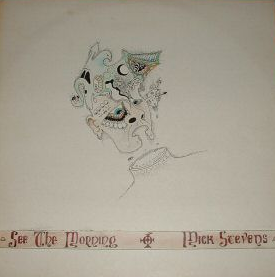
Mick Stevens - See The Morning
Reviewed By The Active Listener.A new discovery for me, this 1972 title was originally released on the Deroy label and destined for a life of obscurity by that label's practice of pressing excruciatingly small runs - almost always less than a hundred, and often no more than ten.
Chances of picking this up on vinyl then are very slim, but fortunately Shadoks have released this on CD coupled with another of his albums, which I haven't heard so won't cover here.
There are a seemingly endless amount of small / private press folk records from the sixties and seventies, so what's so special about this one?
For a start this is one acid-folk rarity that actually has some psych content. Stevens may have recorded this himself, but he's piled on the overdubs - tasteful layers of wah wah guitars, inventive, complex and occasionally avant garde multi layered harmony vocals, and most notably on album closer "Salotan Cinonrever", some very precise and quite beautiful backwards guitar parts.
The songs are memorable too, avoiding another common failing of these private press LPs. Indeed it's quite plausible to imagine "See the Morning" having been released by Deram or Harvest, had the right pair of ears heard it in the first place.
Fans of everyone from Cosby, Stills and Nash and the Fleet Foxes to Nick Drake and Dave Bixby should enjoy this.
Stevens may no longer be with us, but we've been given a second chance to discover his music, so let's not let it sink back into obscurity.
Buy it on CD Here
24 Jun 2012
Pepe Deluxe - Queen of the Wave
Reviewed by the Active Listener.
Finnish act Pepe Deluxe are a totally unique genre-straddling duo who with "Queen of the Wave" have surely released the most startlingly diverse album to be released so far this year. A pop opera based on 19th century novel "A Dweller on Two Planets" and its sequel, "An Earth Dweller’s Return" by Frederick S. Oliver, the first of which was supposedly written "automatically" when the terrified 18 year old author's hand would become possessed and scribble away of it's own accord.
It make an interesting story anyway, and "Queen of the Wave" is as suitably quirky as you'd expect coming from this source material.
While the majority of artist's with this kitchen sink approach simply throw in a bunch of different instruments, Pepe Deluxe's approach is typified by jumping from one genre to another - often three or four times in the same song. They can't be accused of lacking imagination in the methods they use either. How many albums can you name that make use of instruments like the Tesla Coil Synthesizer, Edison's Ghost Machine, the Psychical Predictor and the Great Stalacpipe Organ (apparently the world's largest instrument, found in the Luray Caverns of Virginia)?
Like the majority of rock opera the story is hard to follow and probably best ignored, but is presented in a fascinatingly diverse manner which traverses pop, trip hop, psychedelia, sassy Bond style soul, neo-classical and a hundred other genre's in between.
On first listen there's way too much going on to take in, and the next few listens made it seem even more overwhelming but eventually I managed to get my head around it and now it's one of my favorite albums of the year.
Closer "Riders on the First Ark" is my favorite - a moody epic which sounds like late sixties Scott Walker mixed with liberal doses of Portishead. Great stuff. Smart arse definitely, but with the emphasis on smart.
Check out the album trailer here:
Available on CD Here And on Vinyl Here.
Finnish act Pepe Deluxe are a totally unique genre-straddling duo who with "Queen of the Wave" have surely released the most startlingly diverse album to be released so far this year. A pop opera based on 19th century novel "A Dweller on Two Planets" and its sequel, "An Earth Dweller’s Return" by Frederick S. Oliver, the first of which was supposedly written "automatically" when the terrified 18 year old author's hand would become possessed and scribble away of it's own accord.
It make an interesting story anyway, and "Queen of the Wave" is as suitably quirky as you'd expect coming from this source material.
While the majority of artist's with this kitchen sink approach simply throw in a bunch of different instruments, Pepe Deluxe's approach is typified by jumping from one genre to another - often three or four times in the same song. They can't be accused of lacking imagination in the methods they use either. How many albums can you name that make use of instruments like the Tesla Coil Synthesizer, Edison's Ghost Machine, the Psychical Predictor and the Great Stalacpipe Organ (apparently the world's largest instrument, found in the Luray Caverns of Virginia)?
Like the majority of rock opera the story is hard to follow and probably best ignored, but is presented in a fascinatingly diverse manner which traverses pop, trip hop, psychedelia, sassy Bond style soul, neo-classical and a hundred other genre's in between.
On first listen there's way too much going on to take in, and the next few listens made it seem even more overwhelming but eventually I managed to get my head around it and now it's one of my favorite albums of the year.
Closer "Riders on the First Ark" is my favorite - a moody epic which sounds like late sixties Scott Walker mixed with liberal doses of Portishead. Great stuff. Smart arse definitely, but with the emphasis on smart.
Check out the album trailer here:
Available on CD Here And on Vinyl Here.
23 Jun 2012
Active Listener Radio - The Rowan Amber Mill Guest Mix
It's time for another installment of Active Listener Radio and once again I'm passing the buck. Stephen from the Rowan Amber Mill has put together tonight's show and a lovely thing it is.
1. The Bony King Of Nowhere by Sandra Kerr & John Faulkner from The Bagpuss Soundtrack.
2. Modern Parlance by Candidate from Nuada.
3. Caroline by Espers from III.
4. Tiffany Glass by Orriel Smith from Fuzzy Felt Folk.
5. Shepherds Plaid by Bait from Bait (re-released on Paradise Circus by The Lilac Time).
6. Magpie Suite pt 3 by Fern Knight from Fern Knight.
7. My Body Is Made Of Sunlight by Circulus from The Lick On The Tip Of An Envelope Yet To Be Sent.
8. The Changes (Suite) by Paddy Kingsland from BBC Radiophonic Workshop A Retrospective.
9. Pipkin by Pamela Wyn Shannon from Courting Autumn.
10. Parliament Hill Fields By Stephen Duffy And The Lilac Time from Runout Groove.
11. Merry-Go-Round by Peter Howell from Radiophonic Workshop A Retrospective.
12. Jenny Again by Tunng from Comments Of The Inner Chorus.
13. Palaces Of Gold by Martin Carthy from Martin Carthy Box Set.
14. Turpin Hero by The Owl Service from A Garland Of Song.
15. Here’s The Tender Coming by The Unthanks from Here’s The Tender Coming.
16. Untitled Cue No.2 from Session Two by The Vernon Elliott Ensemble from Pogles Wood Soundtrack.
1. The Bony King Of Nowhere by Sandra Kerr & John Faulkner from The Bagpuss Soundtrack.
2. Modern Parlance by Candidate from Nuada.
3. Caroline by Espers from III.
4. Tiffany Glass by Orriel Smith from Fuzzy Felt Folk.
5. Shepherds Plaid by Bait from Bait (re-released on Paradise Circus by The Lilac Time).
6. Magpie Suite pt 3 by Fern Knight from Fern Knight.
7. My Body Is Made Of Sunlight by Circulus from The Lick On The Tip Of An Envelope Yet To Be Sent.
8. The Changes (Suite) by Paddy Kingsland from BBC Radiophonic Workshop A Retrospective.
9. Pipkin by Pamela Wyn Shannon from Courting Autumn.
10. Parliament Hill Fields By Stephen Duffy And The Lilac Time from Runout Groove.
11. Merry-Go-Round by Peter Howell from Radiophonic Workshop A Retrospective.
12. Jenny Again by Tunng from Comments Of The Inner Chorus.
13. Palaces Of Gold by Martin Carthy from Martin Carthy Box Set.
14. Turpin Hero by The Owl Service from A Garland Of Song.
15. Here’s The Tender Coming by The Unthanks from Here’s The Tender Coming.
16. Untitled Cue No.2 from Session Two by The Vernon Elliott Ensemble from Pogles Wood Soundtrack.
22 Jun 2012
An Interview with The Rowan Amber Mill
Stephen from the Rowan Amber Mill joins us today to talk a little about his music, and what he's been up to since the release of Heartwood. Lots of music to look forward to from him by the sounds of it...
Visit the Rowan Amber Mill's website here. Their CDs are way too cheap. Take advantage of it and buy a few....
THE ACTIVE LISTENER : Hi Stephen - would you care to tell us a little bit about yourself?
STEPHEN : Daydreamer. Landscape lover. Music obsessive. Writer and maker of music. Runner of miniscule bespoke cottage record label.
THE ACTIVE LISTENER : When did you start playing music? What sort of stuff were you playing?
STEPHEN : In my teenage years I bought myself a fizzy WASP synth and used an old Commodore Amiga with a very rudimentary “sequencer” to make acid house tracks. I then bought a cheap electric guitar - an Epiphone SG copy and tiny amp out of a catalogue. I learned to play the guitar by murdering covers of everything from the Beatles to Brit-pop.
THE ACTIVE LISTENER : When did you start to write your own stuff, and what did it sound like?
STEPHEN : I bought myself a cheap 2nd hand Yamaha electro-acoustic with the aim of learning to play the kind of music I was actually listening to (Nick Drake, The Lilac Time, Donovan). I had never been able to write anything on the electric guitar and put this down to the fact I couldn’t write a song, but I found that with an acoustic guitar I could write. The songs I began writing were pretty much in the singer- songwriter / storyteller vein, and at a time when there was very little acoustic music being heard, it couldn’t have been much more out of step. I first started writing songs that I was relatively happy with in 2002. I joined up with a good friend (and a great songwriter) I had known from school and we then started a band (Miller) together with a few other friends. We subsequently released a couple of albums that straddled Dark-folk, Americana and Pastoral-psychedelia. We always found it difficult to explain what we sounded like - luckily not many people were interested anyway. After five years I left the band in order to make music more focussed in the area I was most interested - psych-folk.
THE ACTIVE LISTENER : Midsummers was the Rowan Amber Mill's debut. Is this all of your early material or was there other stuff recorded that didn't make it onto the E.P?
STEPHEN : Midsummers was the first CD we released, but previously in 2008 we had released 6 track download only e.p. “Folk Devils and Moral Panics” that was effectively a collection of extended demo’s songs that I had written mostly whilst Miller was falling apart. I had originally recorded the demos and posted a few of them on Myspace, and with the small amount of interest began to assemble a new band that included Terry Stacey (the drummer from Miller) and Kim Guy. We were asked by Candidate if we’d like to provide an e.p. of material for the launch of Indmill in August 2008– an ethically run answer to iTunes (way ahead of its time as it happens). I knocked the demos into shape and Kim added some vocals and recorder to half of the tracks. Last year we made the “Folk Devils..” e.p. available again to download on Bandcamp.
So to answer your question, we were rehearsing and working on lots of new material ready to record a “proper CD”. Recording anything always took a great deal of time and organisation (mainly because it was 150 mile round trip to get us together), so everything we had recorded and finished at that time went on Midsummers. There were a number of tracks (8 or so) that I had partially recorded for Midsummers that didn’t get finished mainly because they didn’t fit the concept, most of these were then either carried over to the Heartwood album or were politely ignored.
THE ACTIVE LISTENER : As good as Midsummers was, Heartwood sounds like a much more confident collection of songs. What's your view on this and what can you tell us about the recording of the album? Any interesting or funny anecdotes?
STEPHEN : Actually I am never confident about any of the songs. Midsummers was a concept (mini) album, and in parts could be regarded as style over content, or perhaps more accurately atmosphere over content. Heartwood was an album of self-contained songs and relied on using instrumentation to convey a warm woodland atmosphere, as opposed to the dark spooky atmosphere that carried the songs on Midsummers.
Much of the feel of the Heartwood album was shaped by the fact that very late on in the process, (with most of the instrumental backing complete but only a couple of basic vocal tracks recorded) Kim was suffering from some big problems with her throat which meant she wouldn’t be able to sing on the album. Our recently recruited recorder player (Sharon Eastwood) stepped up to provide the vocals for the majority of the album. We had recorded the whole album with Kim’s unique vocal tunings in mind (mellow low end bass –with some smooth middle), Sharon’s vocals are at the opposite end of the spectrum, a delicate, natural sweet voice an octave higher than Kim’s. So we ended up changing a fair bit of the instrumentation on the album to suit Sharon’s vocal range, and had we had the time available we would have re-recorded it in a more suitable key too. Sharon’s singing voice provided a different (and welcome) dynamic to the album.
THE ACTIVE LISTENER : The Rowan Amber Mill has been through a few personell changes. Can you tell us a little about the various line-ups? Are you currently working solo?
STEPHEN : I have been lucky with The Rowan Amber Mill in that everyone involved has been amiable, generous and very patient. When I started The Rowan Amber Mill I knew that I needed the right type of singer for the songs, and, after a couple of false starts with others, I was contacted by Kim Guy. When I heard her sing I knew immediately that her voice would be perfect for the songs (she also played a mean recorder and guitar). I then contacted Terry Stacey who had been the drummer in Miller and who had been a great sounding-board in developing songs, and he joined the band as bass player and percussionist. We really got into our stride prior to the recording of Midsummers, and it felt like we were moulding the sound into something quite unique. We also gained a further band member for a few months around this time – Donna Whitlock - a wonderful person and a stunning percussionist, who brought a whole new rhythmic dynamic which was a lasting influence on our music. We recorded Midsummer’s as a three piece and looked to add another member to the band for our debut album and for playing live. Sharon Eastwood joined the band as recorder player and backing singer during the early recording of Heartwood. During the recording of Heartwood it became clear that something had to give. The 150mile round trip for the band to get together was proving very difficult to organise and even more difficult to achieve. Kim’s throat problems meant that she couldn’t sing with us for the foreseeable future, which meant the subsequent cancellation of live dates and reworking the album for a different vocalist, and everything seemed to conspire against the band being able to continue. Sharon subsequently completed the vocals on the album. It became clear that due to lack of time and geographical constraints we’d no longer be able to get together sufficiently for the band to continue. I went back to my day job and mixed the album in the spare time I had available. Since then The Rowan Amber Mill has gone back to being my solo project, but with some collaborations planned along the way.
THE ACTIVE LISTENER : I first found out about the Rowan Amber Mill a few years ago when I was googling for music that was inspired by the Wicker Man. At the time you seemed to be one of the only names to pop up, but now there seems to be a massive wicker-folk movement. How much of an influence did the Wicker Man actually exert on you and how do you feel about the other artists that are working on the scene with you? Anyone out there you're particularly into?
STEPHEN : The Wicker Man through its story, visuals, and soundtrack, seems custom made to inspire musicians who like to make music that is a little off the beaten track. The film has had a large influence on my music - especially my earlier work (the first song I wrote in Miller in 2002 was a kind of re-imagining of the procession scene from The Wicker Man). I’m never too sure about subgenres that bands get associated with, but I think there is probably an indirect lineage of bands like Candidate, Circulus, Espers, Tunng and The Owl Service that had that “Wicker” vibe going on at various stages. Some of the bands that have carried that processional torch aloft since are wonderful bands like Sproatly Smith, Wyrdstone and The Hare And The Moon. The recent “Weirdlore” compilation seems to be infused with similar (mandrake) roots and I’d highly recommend this release to anyone who likes their music folky and weird. Films have always exerted an influence on our songs. Valerie And Her Week Of Wonders, Winstanley, Kes, The Grapes Of Wrath and the films of Pasolini, Bergman and Tarkovsky have by virtue of their stories, visuals or soundtracks, inspired various of our songs.
THE ACTIVE LISTENER : What can you tell us about the track you've just finished working on? Are you at liberty to talk about the compilation it will feature on?
STEPHEN : The track is called “On Ridgeway Fields” and all being well, will feature on the new dark folk compilation album that is being put together by the Cold Spring label. The compilation is part of their folk series that commenced with the “John Barleycorn Reborn” release and which was followed by “We Bring You A King With A Head Of Gold” (which featured our track “Blood And Bones”). Having really enjoyed the previous two releases, I can’t wait to hear the new one when it gets released. “On Ridgeway Fields” was inspired by the ancient historical Ridgeway in England, and in particular visits to the areas surrounding the white horse at Uffington and the standing stones at Avebury. The song is a fair bit more sonic than the songs on our last album - and I even dusted off the electric guitar and fuzz pedal. The song features some guest vocals from Melanie O’Dene.
THE ACTIVE LISTENER : You've just finished building a studio.
STEPHEN : The studio (or shed) is now completed. The downtime in recording over the last couple of years has helped concentrate my mind on how best to put together a simple, useable, small recording space on a miniscule budget. Some reclaimed laminate flooring and sound proofing, and some wall tiles have done the trick for the acoustics with a new mic and updated recording software helping to gain better control over the sound.
THE ACTIVE LISTENER : Are you working on material for a new album at the moment? If so what stage is it up to and what can you tell us about it? Have you got a feel for what the finished result may be like yet?
STEPHEN : Since completing Heartwood a couple of years ago domestic commitments have only allowed the occasional week here and there to do any recording. I’m not very good at recording under time pressures so quite few of those tracks have been abandoned as I just wasn’t happy with them. I have concentrated more on writing during this time. At the moment I have a dozen songs that I am happy with at various stages of recording, a couple have been finished, but the rest are still in progress. After this summer I will be able to return to music full time and I am really looking forward to it. I think the recording will proceed quite fast as I have lived with the songs for so long that I have a very good idea how I want to arrange them. The songs as written feel quite dark, and they are likely to be relatively sparse but be a fair bit more sonic than the last album, with a sprinkling of fuzz guitars and vintage synths blended in with the harps and flutes. The songs have, as always, been heavily influenced by the landscape, but also inspired by a number of 1970s children’s TV serials (things like The Changes, Sky, Moon Stallion, The Owl Service, Children Of The Stones) and 1970’s plays / serials such as (Penda’s Fen, Red Shift, Hammer House Of Horror etc). I hope that I’ll be able to release an e.p. sometime this year with an album to follow early in 2013.
Stephen has also supplied us with a guest mix for the next episode of Active Listener Radio - watch this space.....
Visit the Rowan Amber Mill's website here. Their CDs are way too cheap. Take advantage of it and buy a few....
THE ACTIVE LISTENER : Hi Stephen - would you care to tell us a little bit about yourself?
STEPHEN : Daydreamer. Landscape lover. Music obsessive. Writer and maker of music. Runner of miniscule bespoke cottage record label.
THE ACTIVE LISTENER : When did you start playing music? What sort of stuff were you playing?
STEPHEN : In my teenage years I bought myself a fizzy WASP synth and used an old Commodore Amiga with a very rudimentary “sequencer” to make acid house tracks. I then bought a cheap electric guitar - an Epiphone SG copy and tiny amp out of a catalogue. I learned to play the guitar by murdering covers of everything from the Beatles to Brit-pop.
THE ACTIVE LISTENER : When did you start to write your own stuff, and what did it sound like?
STEPHEN : I bought myself a cheap 2nd hand Yamaha electro-acoustic with the aim of learning to play the kind of music I was actually listening to (Nick Drake, The Lilac Time, Donovan). I had never been able to write anything on the electric guitar and put this down to the fact I couldn’t write a song, but I found that with an acoustic guitar I could write. The songs I began writing were pretty much in the singer- songwriter / storyteller vein, and at a time when there was very little acoustic music being heard, it couldn’t have been much more out of step. I first started writing songs that I was relatively happy with in 2002. I joined up with a good friend (and a great songwriter) I had known from school and we then started a band (Miller) together with a few other friends. We subsequently released a couple of albums that straddled Dark-folk, Americana and Pastoral-psychedelia. We always found it difficult to explain what we sounded like - luckily not many people were interested anyway. After five years I left the band in order to make music more focussed in the area I was most interested - psych-folk.
THE ACTIVE LISTENER : Midsummers was the Rowan Amber Mill's debut. Is this all of your early material or was there other stuff recorded that didn't make it onto the E.P?
STEPHEN : Midsummers was the first CD we released, but previously in 2008 we had released 6 track download only e.p. “Folk Devils and Moral Panics” that was effectively a collection of extended demo’s songs that I had written mostly whilst Miller was falling apart. I had originally recorded the demos and posted a few of them on Myspace, and with the small amount of interest began to assemble a new band that included Terry Stacey (the drummer from Miller) and Kim Guy. We were asked by Candidate if we’d like to provide an e.p. of material for the launch of Indmill in August 2008– an ethically run answer to iTunes (way ahead of its time as it happens). I knocked the demos into shape and Kim added some vocals and recorder to half of the tracks. Last year we made the “Folk Devils..” e.p. available again to download on Bandcamp.
So to answer your question, we were rehearsing and working on lots of new material ready to record a “proper CD”. Recording anything always took a great deal of time and organisation (mainly because it was 150 mile round trip to get us together), so everything we had recorded and finished at that time went on Midsummers. There were a number of tracks (8 or so) that I had partially recorded for Midsummers that didn’t get finished mainly because they didn’t fit the concept, most of these were then either carried over to the Heartwood album or were politely ignored.THE ACTIVE LISTENER : As good as Midsummers was, Heartwood sounds like a much more confident collection of songs. What's your view on this and what can you tell us about the recording of the album? Any interesting or funny anecdotes?
STEPHEN : Actually I am never confident about any of the songs. Midsummers was a concept (mini) album, and in parts could be regarded as style over content, or perhaps more accurately atmosphere over content. Heartwood was an album of self-contained songs and relied on using instrumentation to convey a warm woodland atmosphere, as opposed to the dark spooky atmosphere that carried the songs on Midsummers.
Much of the feel of the Heartwood album was shaped by the fact that very late on in the process, (with most of the instrumental backing complete but only a couple of basic vocal tracks recorded) Kim was suffering from some big problems with her throat which meant she wouldn’t be able to sing on the album. Our recently recruited recorder player (Sharon Eastwood) stepped up to provide the vocals for the majority of the album. We had recorded the whole album with Kim’s unique vocal tunings in mind (mellow low end bass –with some smooth middle), Sharon’s vocals are at the opposite end of the spectrum, a delicate, natural sweet voice an octave higher than Kim’s. So we ended up changing a fair bit of the instrumentation on the album to suit Sharon’s vocal range, and had we had the time available we would have re-recorded it in a more suitable key too. Sharon’s singing voice provided a different (and welcome) dynamic to the album.THE ACTIVE LISTENER : The Rowan Amber Mill has been through a few personell changes. Can you tell us a little about the various line-ups? Are you currently working solo?
STEPHEN : I have been lucky with The Rowan Amber Mill in that everyone involved has been amiable, generous and very patient. When I started The Rowan Amber Mill I knew that I needed the right type of singer for the songs, and, after a couple of false starts with others, I was contacted by Kim Guy. When I heard her sing I knew immediately that her voice would be perfect for the songs (she also played a mean recorder and guitar). I then contacted Terry Stacey who had been the drummer in Miller and who had been a great sounding-board in developing songs, and he joined the band as bass player and percussionist. We really got into our stride prior to the recording of Midsummers, and it felt like we were moulding the sound into something quite unique. We also gained a further band member for a few months around this time – Donna Whitlock - a wonderful person and a stunning percussionist, who brought a whole new rhythmic dynamic which was a lasting influence on our music. We recorded Midsummer’s as a three piece and looked to add another member to the band for our debut album and for playing live. Sharon Eastwood joined the band as recorder player and backing singer during the early recording of Heartwood. During the recording of Heartwood it became clear that something had to give. The 150mile round trip for the band to get together was proving very difficult to organise and even more difficult to achieve. Kim’s throat problems meant that she couldn’t sing with us for the foreseeable future, which meant the subsequent cancellation of live dates and reworking the album for a different vocalist, and everything seemed to conspire against the band being able to continue. Sharon subsequently completed the vocals on the album. It became clear that due to lack of time and geographical constraints we’d no longer be able to get together sufficiently for the band to continue. I went back to my day job and mixed the album in the spare time I had available. Since then The Rowan Amber Mill has gone back to being my solo project, but with some collaborations planned along the way.
THE ACTIVE LISTENER : I first found out about the Rowan Amber Mill a few years ago when I was googling for music that was inspired by the Wicker Man. At the time you seemed to be one of the only names to pop up, but now there seems to be a massive wicker-folk movement. How much of an influence did the Wicker Man actually exert on you and how do you feel about the other artists that are working on the scene with you? Anyone out there you're particularly into?
STEPHEN : The Wicker Man through its story, visuals, and soundtrack, seems custom made to inspire musicians who like to make music that is a little off the beaten track. The film has had a large influence on my music - especially my earlier work (the first song I wrote in Miller in 2002 was a kind of re-imagining of the procession scene from The Wicker Man). I’m never too sure about subgenres that bands get associated with, but I think there is probably an indirect lineage of bands like Candidate, Circulus, Espers, Tunng and The Owl Service that had that “Wicker” vibe going on at various stages. Some of the bands that have carried that processional torch aloft since are wonderful bands like Sproatly Smith, Wyrdstone and The Hare And The Moon. The recent “Weirdlore” compilation seems to be infused with similar (mandrake) roots and I’d highly recommend this release to anyone who likes their music folky and weird. Films have always exerted an influence on our songs. Valerie And Her Week Of Wonders, Winstanley, Kes, The Grapes Of Wrath and the films of Pasolini, Bergman and Tarkovsky have by virtue of their stories, visuals or soundtracks, inspired various of our songs.
THE ACTIVE LISTENER : What can you tell us about the track you've just finished working on? Are you at liberty to talk about the compilation it will feature on?
STEPHEN : The track is called “On Ridgeway Fields” and all being well, will feature on the new dark folk compilation album that is being put together by the Cold Spring label. The compilation is part of their folk series that commenced with the “John Barleycorn Reborn” release and which was followed by “We Bring You A King With A Head Of Gold” (which featured our track “Blood And Bones”). Having really enjoyed the previous two releases, I can’t wait to hear the new one when it gets released. “On Ridgeway Fields” was inspired by the ancient historical Ridgeway in England, and in particular visits to the areas surrounding the white horse at Uffington and the standing stones at Avebury. The song is a fair bit more sonic than the songs on our last album - and I even dusted off the electric guitar and fuzz pedal. The song features some guest vocals from Melanie O’Dene.
THE ACTIVE LISTENER : You've just finished building a studio.
STEPHEN : The studio (or shed) is now completed. The downtime in recording over the last couple of years has helped concentrate my mind on how best to put together a simple, useable, small recording space on a miniscule budget. Some reclaimed laminate flooring and sound proofing, and some wall tiles have done the trick for the acoustics with a new mic and updated recording software helping to gain better control over the sound.
THE ACTIVE LISTENER : Are you working on material for a new album at the moment? If so what stage is it up to and what can you tell us about it? Have you got a feel for what the finished result may be like yet?
STEPHEN : Since completing Heartwood a couple of years ago domestic commitments have only allowed the occasional week here and there to do any recording. I’m not very good at recording under time pressures so quite few of those tracks have been abandoned as I just wasn’t happy with them. I have concentrated more on writing during this time. At the moment I have a dozen songs that I am happy with at various stages of recording, a couple have been finished, but the rest are still in progress. After this summer I will be able to return to music full time and I am really looking forward to it. I think the recording will proceed quite fast as I have lived with the songs for so long that I have a very good idea how I want to arrange them. The songs as written feel quite dark, and they are likely to be relatively sparse but be a fair bit more sonic than the last album, with a sprinkling of fuzz guitars and vintage synths blended in with the harps and flutes. The songs have, as always, been heavily influenced by the landscape, but also inspired by a number of 1970s children’s TV serials (things like The Changes, Sky, Moon Stallion, The Owl Service, Children Of The Stones) and 1970’s plays / serials such as (Penda’s Fen, Red Shift, Hammer House Of Horror etc). I hope that I’ll be able to release an e.p. sometime this year with an album to follow early in 2013.
Stephen has also supplied us with a guest mix for the next episode of Active Listener Radio - watch this space.....
21 Jun 2012
Desert Island Discs Selected by Folk Police's Nigel Spencer
Nigel Spencer from the fabulous Folk Police Recordings label ( responsible for the latest Sproatly Smith, The Woodbine & Ivy band the the Weirdlore compilation among others ) has invited us to join him on his Desert Island. He's not entirely happy with his lot, but has ten great albums with him to help exorcise the ghosts of those he can never hear again.
"Lots of omissions here, some of which I’ll allude to below, but how can anyone come up with a definitive list of ten or so albums without missing out some truly astounding music? I’d come up with the usual caveat about any list like this being subject to change on a daily basis, but it isn’t entirely true: at least half of the albums here would make the grade almost permanently. So… if the desert island were big enough, I’d also take some Beatles (Revolver or Abbey Road), a bit of classic punk (probably Crossing the Red Sea with the Adverts and a Ramones album), lots of traditional folk from the seventies and a smattering of folk rock, jazz and classical – Ralph Vaughan Williams, Mr Fox, Sun Ra, Arvo Part, Trees and Bitches Brew-era Miles Davies spring to mind. Shockingly, there’s almost no prog, yet Gong, Hatfield and the North and Caravan at the very least are an important part of my musical hinterland. There’s no Bevis Frond, no Peter Bellamy, no guitar soli (where are Robbie Basho and Jack Rose, for god’s sake?), no Dock Boggs, no Toumani Diabate, no Stone Breath, no Piper at the Gates of Dawn, no Incredible String Band. This damned island is no fun at all – I’m already picturing myself sitting under a lonely old palm tree with my paltry ten LPs grieving for all those classic albums I’ll never hear again… And finally, my desert island would have an entirely cupboard full of compilations, starting with Nuggets, Insane Times, Meridian 1970, Country Got Soul and Perfect Unpop. Some music was made for anthologising: I’ve never bought the myth that compilations aren’t ‘proper’ albums… "
Here we go, then:
Easter Everywhere – 13th Floor Elevators
I’d include this for ‘Slip Inside This House’ alone – probably one of the most perfect eight minutes of music ever committed to vinyl. The combination of Roky Erickson’s plaintive voice, ready at any moment to spill over into a full-throated rock ‘n’ roll howl, Tommy Hall’s strange and powerful lyrics bursting at the seams with pseudo-religious imagery and the band’s deep-fried psychedelic desert rock is pretty much unbeatable.
BUY IT HERE
Marquee Moon – Television
I first bought this when I was 13 and have been listening to it regularly ever since. Apart from being the band that led me to discover the 13th Floor Elevators via their cover of Fire Engine, Television showed us you could do incredible guitar solos without descending into aimless noodling or guitar-bore showing off – and do them in the context of great, punchy, soulful rock ‘n’ roll. There’s something very economical about their sound, yet it also has an expansive, yearning quality very few guitar bands have successfully achieved – most bands who have attempted this have tipped over into pomposity and the cult of wide-screen epic tedium. And Robert Mapplethorpe’s evocative cover photo is one of the iconic images of the punk era.
BUY IT HERE
Time of the Last Persecution – Bill Fay
There isn’t a dodgy track on this album. Lots of faintly irrelevant questions have been asked as to whether it is a portrait of one man’s mental and spiritual disintegration. What matters, however, isn’t necessarily Mr Fay’s state of mind when he wrote these songs and recorded this album, but the fact that every one of them is a small masterpiece. In a parallel universe, this would have been one of the best selling singer-songwriter albums of all time, the genre wouldn’t be dominated by insipid bollocks and no-one would have heard of Elton John.
BUY IT HERE
Even Serpents Shine – The Only Ones
I suspect this band were always a bit unfashionable – I can recall punk mates sneering slightly about my mild obsession with them (they weren’t stripped down enough, they did guitar solos, their hair was too long). In retrospect, it’s a psych-influenced classic that has stood the test of time far better than some of the more ‘acceptable’ punk and new wave releases of the era. All this is notwithstanding the sneaking suspicion that every song is essentially about Peter Perrett’s dysfunctional love affair with heroin.
BUY IT HERE
Fully Qualified Survivor – Michael Chapman
It could have equally well been Flat, Baroque and Berserk by Roy Harper or Outlander by Meic Stevens as this. I’m not generally a fan of the singer songwriter genre – too much of it is navel gazing, introspective crap, and my patience for desperately sensitive young men with guitars is extremely limited (NB: how I wish they would stop sending their demos to Folk Police we’re NOT INTERESTED in singer songwriters – not unless you’re as good as Adam Leonard. And chances are you’re not, so just stop it. Phew, that’s better…). Back to Michael Chapman, songs like Postcards of Scarborough and The Aviator take this stunted and bankrupt genre to a completely different level. It helps that he’s also a phenomenal guitarist.
BUY IT HERE
Christian Lucifer – Perry Leopold
Considering the amount of railing I’m doing against singer-songwriters and against epic tendencies in music, this list is riddled with both. I’d suggest it’s the flowers in a dungheap syndrome – all that crap must occasionally fertilise something beautiful. This album has lashings of great song writing and is shot through with a sense of grandeur – at times it sounds like an acid-folk Scott Walker, which is not something to be sniffed at. I’ve absolutely no idea what he’s on about most of the time – there seems to be some sort of Gnostic dualism vibe going on - but nonetheless it’s mesmerising stuff.
BUY IT HERE
Rockbottom – Robert Wyatt
Robert Wyatt could sing the instruction manual for a washing machine and still sound incredible. I think I’m attracted to plaintive voices and songs with a yearning, melancholic quality, and this album has both – along with a dash of humour and some moments of pure, unbridled ecstacy. I’ve had a copy of this album since I was about 17, when I bought it as a cut price double reissue with Ruth is Stranger than Richard, and I can still lose myself in it completely.
BUY IT HERE
Amaryllis – Bread Love and Dreams
I’ve listened to loads of psych folk from the early 70s and I’ll let you into a secret: a lot of it isn’t very good. For every Mellow Candle or Forest or Comus, there are plenty of bands who have one or two decent tracks on an otherwise moribund album and there are stacks of truly awful albums that are obscure largely because they deserve to be. I think I was lulled into a false sense of security by the Lammas Night Laments series of CDRs that The Unbroken Circle website put out: not only was a lot of thought put into sequencing these compilations, but Mark Coyle who ran the site was very adapt at picking out the wheat from amongst the chaff. Amaryllis is one of the good ones – the title track, a progressive folk epic (that word again!) that takes up the whole of side one is worth the price of admission on its own.
BUY IT HERE
Farewell Sorrow – Alasdair Roberts
I could have chosen any one of Alasdair Roberts’ albums. Quite simply, he is the single most important figure to have emerged on the British folk scene in the past 20 years. For much of this time, he has ploughed a lonely furrow, playing traditional songs and folk-inspired originals to a non-folky audience, whilst until recently largely being ignored by the ‘official’ folk scene. In an era where British traditional folk is dominated by well-mannered, clean-cut music school graduates who don evening wear for their album covers and churn out technically proficient yet hugely dull folk-lite for an increasingly elderly and musically conservative audience, we need people like Mr Roberts, who understands that traditional British folk music is a visceral and deeply human thing that needs to be treated accordingly. This album is nearly all made up of Ali’s own songs and they demonstrate just how well he understands and inhabits the rich seams he mines.
BUY IT HERE
Moksha – Amjad Ali Khan
I’m slightly obsessed with Indian classical music – I have a whole shelf of albums covering various vocal and instrumental traditions fro different parts of this vast country. This road was one I started travelling down when I visited India 12 years ago and, as well as falling in love with the place, was lucky enough to catch quite a lot of live music. I freely admit to knowing virtually nothing about it – I just like how it sounds. It ticks a lot of boxes for me – drones, improvisation, music that ebbs and flows and builds to an ecstatic crescendo. I could have chosen lots of different albums to take to my desert island, but I’ve gone for one by sarod maestro Ustad Amjad Ali Khan, partly because I love the sound of the sarod and of his playing and partly because of all the Indian classical albums I have, it is his I return to the most.
BUY IT HERE
Cruel Sister -Pentangle
Finally, I wanted to include at least one traditional folk album and one folk rock album, and I really struggled as to which ones to pick. I tend to like best the recordings made between the late sixties and mid seventies, because they have a rawness and immediacy that is sorely lacking from most traditional folk albums that are being released these days. I also wanted to pick an album produced by Bill Leader, who was responsible for so many of my favourite folk albums, from Bert Jansch’s Rosemary Lane to Mr Fox’s The Gypsy to Nic Jones’ Ballads and Songs to Ray Fisher’s The Bonny Birdie to Mike and Lal Waterson’s Bright Phoebus. So the obvious choice is Pentangle’s Cruel Sister – a folk rock album of traditional songs recorded by Bill Leader. And to cap it all, it has Pentangle’s finest moment, the incendiary Jack Orion in all its 11 minutes of splendour. One of the thinks that puts Pentangle head and shoulders above most folk rock is that they have a real airiness and lightness of touch – especially in the rhythm section – that stands in stark contrast to the rather earthbound plodding that hampers much of a genre whose finest moment is still yet to come.
BUY IT HERE
Nigel Spencer, Folk Police Recordings
"Lots of omissions here, some of which I’ll allude to below, but how can anyone come up with a definitive list of ten or so albums without missing out some truly astounding music? I’d come up with the usual caveat about any list like this being subject to change on a daily basis, but it isn’t entirely true: at least half of the albums here would make the grade almost permanently. So… if the desert island were big enough, I’d also take some Beatles (Revolver or Abbey Road), a bit of classic punk (probably Crossing the Red Sea with the Adverts and a Ramones album), lots of traditional folk from the seventies and a smattering of folk rock, jazz and classical – Ralph Vaughan Williams, Mr Fox, Sun Ra, Arvo Part, Trees and Bitches Brew-era Miles Davies spring to mind. Shockingly, there’s almost no prog, yet Gong, Hatfield and the North and Caravan at the very least are an important part of my musical hinterland. There’s no Bevis Frond, no Peter Bellamy, no guitar soli (where are Robbie Basho and Jack Rose, for god’s sake?), no Dock Boggs, no Toumani Diabate, no Stone Breath, no Piper at the Gates of Dawn, no Incredible String Band. This damned island is no fun at all – I’m already picturing myself sitting under a lonely old palm tree with my paltry ten LPs grieving for all those classic albums I’ll never hear again… And finally, my desert island would have an entirely cupboard full of compilations, starting with Nuggets, Insane Times, Meridian 1970, Country Got Soul and Perfect Unpop. Some music was made for anthologising: I’ve never bought the myth that compilations aren’t ‘proper’ albums… "
Here we go, then:
I’d include this for ‘Slip Inside This House’ alone – probably one of the most perfect eight minutes of music ever committed to vinyl. The combination of Roky Erickson’s plaintive voice, ready at any moment to spill over into a full-throated rock ‘n’ roll howl, Tommy Hall’s strange and powerful lyrics bursting at the seams with pseudo-religious imagery and the band’s deep-fried psychedelic desert rock is pretty much unbeatable.
BUY IT HERE
Marquee Moon – Television
BUY IT HERE
There isn’t a dodgy track on this album. Lots of faintly irrelevant questions have been asked as to whether it is a portrait of one man’s mental and spiritual disintegration. What matters, however, isn’t necessarily Mr Fay’s state of mind when he wrote these songs and recorded this album, but the fact that every one of them is a small masterpiece. In a parallel universe, this would have been one of the best selling singer-songwriter albums of all time, the genre wouldn’t be dominated by insipid bollocks and no-one would have heard of Elton John.
BUY IT HERE
I suspect this band were always a bit unfashionable – I can recall punk mates sneering slightly about my mild obsession with them (they weren’t stripped down enough, they did guitar solos, their hair was too long). In retrospect, it’s a psych-influenced classic that has stood the test of time far better than some of the more ‘acceptable’ punk and new wave releases of the era. All this is notwithstanding the sneaking suspicion that every song is essentially about Peter Perrett’s dysfunctional love affair with heroin.
BUY IT HERE
It could have equally well been Flat, Baroque and Berserk by Roy Harper or Outlander by Meic Stevens as this. I’m not generally a fan of the singer songwriter genre – too much of it is navel gazing, introspective crap, and my patience for desperately sensitive young men with guitars is extremely limited (NB: how I wish they would stop sending their demos to Folk Police we’re NOT INTERESTED in singer songwriters – not unless you’re as good as Adam Leonard. And chances are you’re not, so just stop it. Phew, that’s better…). Back to Michael Chapman, songs like Postcards of Scarborough and The Aviator take this stunted and bankrupt genre to a completely different level. It helps that he’s also a phenomenal guitarist.
BUY IT HERE
Considering the amount of railing I’m doing against singer-songwriters and against epic tendencies in music, this list is riddled with both. I’d suggest it’s the flowers in a dungheap syndrome – all that crap must occasionally fertilise something beautiful. This album has lashings of great song writing and is shot through with a sense of grandeur – at times it sounds like an acid-folk Scott Walker, which is not something to be sniffed at. I’ve absolutely no idea what he’s on about most of the time – there seems to be some sort of Gnostic dualism vibe going on - but nonetheless it’s mesmerising stuff.
BUY IT HERE
Robert Wyatt could sing the instruction manual for a washing machine and still sound incredible. I think I’m attracted to plaintive voices and songs with a yearning, melancholic quality, and this album has both – along with a dash of humour and some moments of pure, unbridled ecstacy. I’ve had a copy of this album since I was about 17, when I bought it as a cut price double reissue with Ruth is Stranger than Richard, and I can still lose myself in it completely.
BUY IT HERE
Amaryllis – Bread Love and Dreams
BUY IT HERE
I could have chosen any one of Alasdair Roberts’ albums. Quite simply, he is the single most important figure to have emerged on the British folk scene in the past 20 years. For much of this time, he has ploughed a lonely furrow, playing traditional songs and folk-inspired originals to a non-folky audience, whilst until recently largely being ignored by the ‘official’ folk scene. In an era where British traditional folk is dominated by well-mannered, clean-cut music school graduates who don evening wear for their album covers and churn out technically proficient yet hugely dull folk-lite for an increasingly elderly and musically conservative audience, we need people like Mr Roberts, who understands that traditional British folk music is a visceral and deeply human thing that needs to be treated accordingly. This album is nearly all made up of Ali’s own songs and they demonstrate just how well he understands and inhabits the rich seams he mines.
BUY IT HERE
Moksha – Amjad Ali Khan
BUY IT HERE
Finally, I wanted to include at least one traditional folk album and one folk rock album, and I really struggled as to which ones to pick. I tend to like best the recordings made between the late sixties and mid seventies, because they have a rawness and immediacy that is sorely lacking from most traditional folk albums that are being released these days. I also wanted to pick an album produced by Bill Leader, who was responsible for so many of my favourite folk albums, from Bert Jansch’s Rosemary Lane to Mr Fox’s The Gypsy to Nic Jones’ Ballads and Songs to Ray Fisher’s The Bonny Birdie to Mike and Lal Waterson’s Bright Phoebus. So the obvious choice is Pentangle’s Cruel Sister – a folk rock album of traditional songs recorded by Bill Leader. And to cap it all, it has Pentangle’s finest moment, the incendiary Jack Orion in all its 11 minutes of splendour. One of the thinks that puts Pentangle head and shoulders above most folk rock is that they have a real airiness and lightness of touch – especially in the rhythm section – that stands in stark contrast to the rather earthbound plodding that hampers much of a genre whose finest moment is still yet to come.
BUY IT HERE
Nigel Spencer, Folk Police Recordings
20 Jun 2012
Temporal Love - Temporal Love 1
Reviewed By The Active Listener
I'm in a pretty lucky position running this blog, getting sent music from all over the world by bands that realistically I would otherwise have never heard of.
What's even better is that occasionally what I get sent is as mind bogglingly good as Temporal Love's first album.
Where most new psych bands seem to be either cerebral, weird or garage punky (all of which are just fine by me), Temporal Love tap into a more timeless funky blues psych vein which would sound equally as at home in 1969 or amidst the grunge explosion of the early nineties as it does now.
If you can imagine what the Tea Party's first couple of albums would have sounded like had they been raised on Hendrix's Band of Gypsy's rather than Led Zeppelin II, you'll have a pretty good idea of what to expect here.
Heavy psychedelic blues rock with heaps of cool pentatonic riffs, wailing leads played through a wah-wah, very strong vocals which recall the Tea Party's Jeff Martin or a psychedelicized Jeff Healey, a solid rhythm section, smoking jams and some completely unexpected and totally fitting saxophone, all delivered by a talented young band who look like they should be co-headlining with Quicksilver Messenger Service at the Fillmore in 1969.
Highlights? The whole damn album pretty much, with "Rising Sun" being the track I'm finding myself humming inadvertently, with everything else a pretty close second.
Essential listening for those who like their psychedelia to have some soul.
It's coming out on vinyl real soon, and in the meantime you can download it here for a donation of your choosing.
Check out "Rising Sun" here :
I'm in a pretty lucky position running this blog, getting sent music from all over the world by bands that realistically I would otherwise have never heard of.
What's even better is that occasionally what I get sent is as mind bogglingly good as Temporal Love's first album.
Where most new psych bands seem to be either cerebral, weird or garage punky (all of which are just fine by me), Temporal Love tap into a more timeless funky blues psych vein which would sound equally as at home in 1969 or amidst the grunge explosion of the early nineties as it does now.
If you can imagine what the Tea Party's first couple of albums would have sounded like had they been raised on Hendrix's Band of Gypsy's rather than Led Zeppelin II, you'll have a pretty good idea of what to expect here.
Heavy psychedelic blues rock with heaps of cool pentatonic riffs, wailing leads played through a wah-wah, very strong vocals which recall the Tea Party's Jeff Martin or a psychedelicized Jeff Healey, a solid rhythm section, smoking jams and some completely unexpected and totally fitting saxophone, all delivered by a talented young band who look like they should be co-headlining with Quicksilver Messenger Service at the Fillmore in 1969.
Highlights? The whole damn album pretty much, with "Rising Sun" being the track I'm finding myself humming inadvertently, with everything else a pretty close second.
Essential listening for those who like their psychedelia to have some soul.
It's coming out on vinyl real soon, and in the meantime you can download it here for a donation of your choosing.
Check out "Rising Sun" here :
Out of the Crates
Today's "Out of the Crates" selections have been supplied by Alan Bumstead. Check out his vinyl blog here.
I’ve made three selections for Active Listener’s Out Of The Crates series, although my selections are not old items found by
painstakingly digging through crates – I openly confess, I bought these via the
internet while they were still new and (just) affordable, before they sold out
that is, and before the price suddenly rose sky high. In that sense, they’re not
necessarily hens-teeth rare (which only comes with age), but they have become
damn near Kanye West diamond-teeth expensive. The price will come down
eventually when second hand copies hit the market in however many years it’ll
take for those who bought ‘em’s fortunes to change or half-hearted collectors finally
realize that while it felt cool to own a copy at the time, it no longer feels
necessary. Nevertheless, I harbour a small nerdy pride at managing to secure
myself copies of these while the going was not quite gone and the price not
quite offensive.
The first is a record that I believe was probably released
right at the nadir of LP popularity which was the zenith of CD popularity –
around 1999, when albums like the Tindersticks’s Simple Pleasures were produced in such small numbers on vinyl because the vast majority of the band’s fanbase were CD buyers. Except
for a scant few European vinyl freaks, who else cared about the vinyl? I
bought Simple Pleasures in the year of release, on CD of course. It’s not quite my favourite
Tindersticks album, but then it’s certainly on an equal footing with the other
four of their run of five brilliant albums, Tindersticks I through Can
Our Love. It pops up more often now, but a few years ago, a good vinyl copy
was hard to find, and only at usually outrageous prices. I think I paid
something slightly less than outrageous courtesy of my pathological near-daily checking of auctions sites a few years ago, and finally landed myself a brand new copy. This
album signaled a distinct move away from the dramatic style they’d become
entrenched in with Curtains, to
something more upbeat, soulful, and danceable. It’s a great listen. If you’ve
got the dosh and patience and the tenacity to keep looking, you’ll find a copy
within a few months, without too much hassle.
I am an obsessive
Bonnie ‘Prince’ Billy collector. This man never ceases to amaze me.
Naturally
then, when I heard about the hard cover “limited to only 300 copies”
worldwide
release of his interview book with Alan Licht, which included two ten
inch
records containing six of his songs re-recorded, I jumped on it. Here
was the
deal though – it could only be purchased by residents in England for a
hefty
150 quid. Thus I ordered my copy, had it sent to a friend in London, who
then forwarded
it onto me for another not unsmall sum of royal airmail postage in fat
British pounds. And I am now one of only three hundred suckers in the
world
with one. Nevermind that the songs on the EPs have since been issued on a
single 10” record, with a different cover, titled Now Here’s My Plan. The book of course is available worldwide as a paperback edition. Hey, but at least my double 10” is 45-speed vinyl, a higher
quality listen, so take that you single 10” at 33 rpm-owning schmucks! New
copies of the hardback/double 10” are already going for 300 euros on Discogs.
The songs themselves are enjoyable, though I hesitate to recommend them over
the original versions.
I stumbled on a blog just by chance last year and just at
the right time too. It mentioned the release of the Calexico LP boxset of
albums that had previously been sold on CD only at Calexico concerts, Road Atlas. I got mildly excited, being
something of a Calexico fan, and found what must have literally been the last
copy going on ebay, mint, and only $140 US – it’s original price. The two web
outlets for this mentioned on the Calexico website had both sold out. 1200
copies worldwide I believe. And some actual ma & pa shop in the US still selling their
last copy via ebay for $140. Unbeknownst to them, the set wouldn’t appear on
ebay again for anywhere near the same price, and is currently selling for well over
double that on Discogs. So, I’m glad I got in when I did. Erm…this is where the
fun of record collecting spills over into fetishistic emptiness however. Road Atlas is like 12 records, such a
monolith, so daunting in fact that I have yet to play any of them. It’s like a
project I’ll get to working on one day. But just to prove I’m not in this for
commercial gain, I did at least get as far as ripping off the shrinkwrap and pulling all the records
out to browse their covers, and read the enclosed 12” booklet, meaning my
copy is no longer mint. My saving grace. And that’s the way it should be.
19 Jun 2012
Sendelica - The Satori In Elegance Of The Majestic Stonegazer
Reviewed By The Active Listener
This is my first exposure to Welsh space-rockers Sendelica - after seeing that they'd released some material on the exceptional Fruits de Mer label I had to check them out.
This, their latest " The Satori in Elegance of the Majestic Stonegazer" is available through their own webstore here, and if it's anything to go by I'm going to have to work my way through their back catalogue too.
They're 99% instrumental, which I often find repetitive, but they offer plenty of variety and bring in a number of guests on saxophone, sitar and the likes to keep things fresh too.
Opening track "The Magical Ninin" is a good indicator of what to expect, hypnotic, soaring space-rock with a stoner tinge and heaps of incredible and very heavy psych guitar from Peter Bingham.
They draw inspiration from a number of eras - the keyboard / bass / sax interplay recalls "Shine On You Crazy Diamond" in places, while some of the heavier guitar work reminds me of the more New Wave of British Heavy Metal informed Hawkwind material from the early eighties.
The sprawling four part epic that constitutes the title track displays their diversity best, evoking the work of various seventies German space rockers who appeared on the Brain label at one minute, and English nineties ambient electronica the next.
It's a real grower that keeps drawing me back for more listens and it reveals more and more with each play, and unusually for this type of album it sounds a thousand times better through loud speakers than it does through headphones, and the louder the better.
Check out the video for Satori Part III here:
This is my first exposure to Welsh space-rockers Sendelica - after seeing that they'd released some material on the exceptional Fruits de Mer label I had to check them out.
This, their latest " The Satori in Elegance of the Majestic Stonegazer" is available through their own webstore here, and if it's anything to go by I'm going to have to work my way through their back catalogue too.
They're 99% instrumental, which I often find repetitive, but they offer plenty of variety and bring in a number of guests on saxophone, sitar and the likes to keep things fresh too.
Opening track "The Magical Ninin" is a good indicator of what to expect, hypnotic, soaring space-rock with a stoner tinge and heaps of incredible and very heavy psych guitar from Peter Bingham.
They draw inspiration from a number of eras - the keyboard / bass / sax interplay recalls "Shine On You Crazy Diamond" in places, while some of the heavier guitar work reminds me of the more New Wave of British Heavy Metal informed Hawkwind material from the early eighties.
The sprawling four part epic that constitutes the title track displays their diversity best, evoking the work of various seventies German space rockers who appeared on the Brain label at one minute, and English nineties ambient electronica the next.
It's a real grower that keeps drawing me back for more listens and it reveals more and more with each play, and unusually for this type of album it sounds a thousand times better through loud speakers than it does through headphones, and the louder the better.
Check out the video for Satori Part III here:
Subscribe to:
Posts (Atom)