15 Feb 2015

Forever Pavot "Rhapsode"


Reviewed by Nathan Ford

Emile Sornin's one man band Forever Pavot has released several singles over the last year which have been intriguing enough to build up some sort of anticipation that his debut full length will be something pretty special. And "Rhapsode", I am glad to say, doesn't disappoint now that it's here.

Building on the psych-pop-meets-vintage-euro-cinema vibes of those two singles (which you can find here), "Rhapsode" is split fairly evenly between the cinematic and the hooky pop side, with lovely attention to detail in its baroque pop arrangements that make the disparate strands intertwine effortlessly. Comparisons to Jean Claude Vanier aren't unwarranted, but Emile has a more pronounced sense of pop hooksmithery that puts him into the same sort of league as Tara King TH. and Halasan Bazaar; able to cast the most direct and engaging hooks within exotic and uber hip arrangements that swing with that effortless French cool, and the occasional Italian crime caper vibe.

And while fans of recent baroque pop revivalists like Jacco Gardner and Violet Swells will settle in very comfortably here, Sornin has a tougher edge - witness the frantic fuzz and farfisa on numbers like "La Rabla" and "Les Cigognes Nenuphars - to help offset the occasional fluffy moment, and give "Rhapsode" a little more depth than your average baroque pop album. The frequent instrumental interludes tie things together nicely too, creating a continuity that helps the album flow as a uniform piece, rather than feeling like a selection of bits and pieces tacked together. With the diversity on display here, that is an admirable feat.

The press release for "Rhapsode" includes the following statement from Sornin: "I feel a bit like Stereolab or Broadcast, artists who draw from the past to make something new (...) Ten years ago or so, I was doing hardcore punk, then I did chiptune, pop, compos garage / folk recorded on K7, and now things inspired from the 60's movie music ... the only guideline are my desires. Nobody will be able to get in my way if I want to make a reggae album in three years or an album of French songs. Because I'm the one who decides." I'm sure there will be plenty of people frustrated by the potential bandwagon-jumping sentiments of that statement. Particularly as there are bands everywhere who have spent years plugging away on albums that simply are not in the same league as "Rhapsode". But it seems that Sornin is one of those blessed with the keen observational skills and melodic sense to make whatever he puts his name to an unqualified success.

Here's hoping that "Rhapsode" earns the accolades that it deserves, and that the attention is enough to keep Sornin on this particular course for a little while longer at least. And if not, at least we've got a very fine album to revisit often here, before he turns his attention to that French language Peter Tosh covers album.

"Rhapsode" is available here on vinyl, and also through the link below on CD or digitally.
 

14 Feb 2015

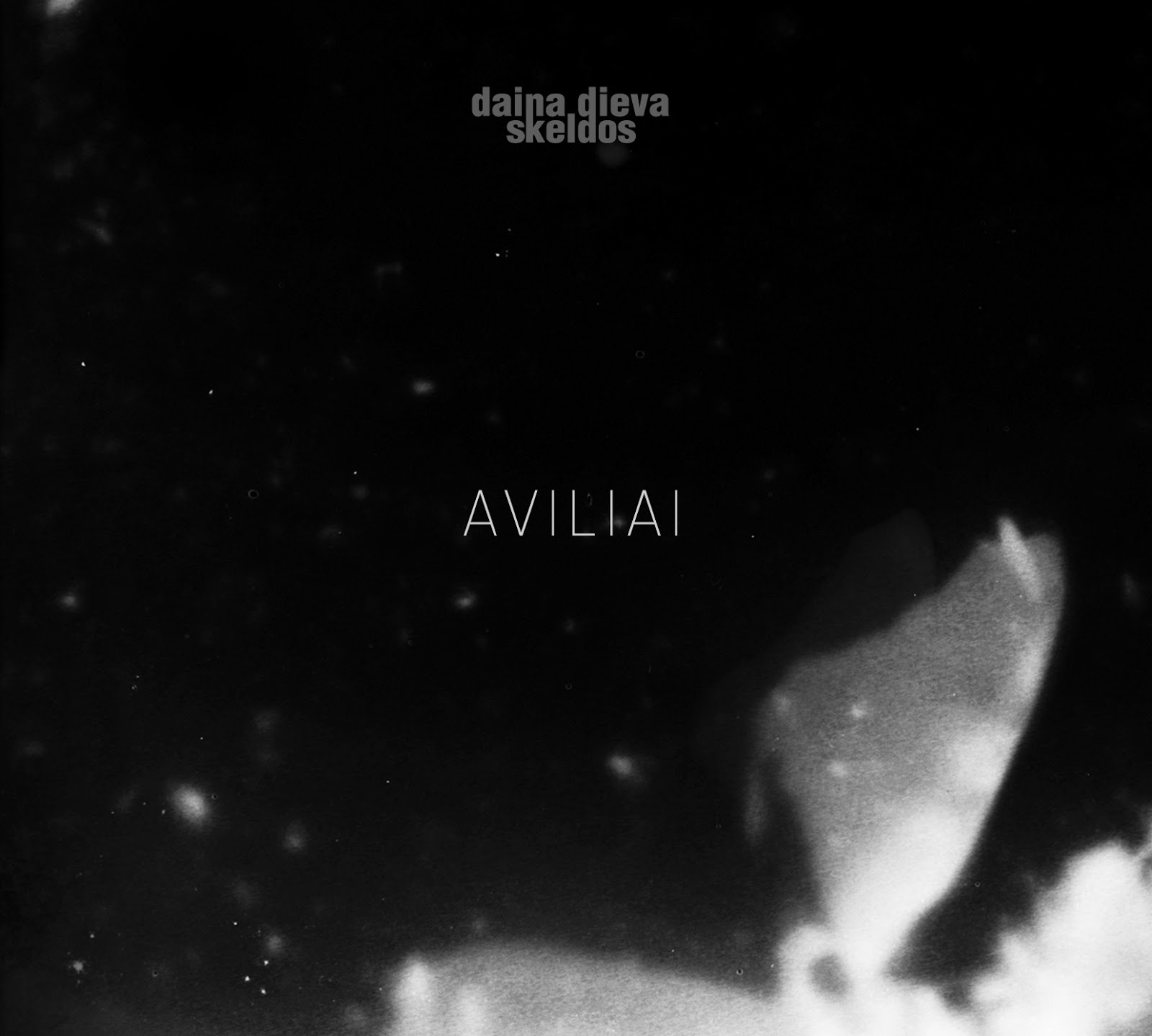
Daina Dieva / Skeldos "Aviliai"


Reviewed by Grey Malkin (The Hare & The Moon)

Out of the winter’s darkness comes ‘Aviliai’, a collaborative album from Lithuania’s Daina Dieva and Skeldos that by all accounts has been brewing between the two drone based experimental projects for several years. Described by Skeldos as being 'about a dream, which is being born while you fall into the sleep while surrounded by the branches of a tree, as if in your bee-hive. It is as if you’d walk though viscous sands that become endless seas, into the sound of the rain of moths. It’s a dream which needs you body-less. It’s a dream from which you can’t return.' Indeed this is an album that drifts enticingly, is at times shape shifting and formless whilst at others concrete and abrasive. The sounds contained herein are otherworldly, complex and with many layers and depths, certainly dark but also coldly beautiful. To call this album dreamlike then is an apt analogy. If the unconscious is a haunted house then this is the music that plays in its corridors.

Opener 'Sutemų' enters with a flutter from the silence before drone like strings hang in the air, shimmering like some ancient choir. Performance artist, vocalist and writer Daina Dieva, details her vision of the recording as '...all of those feelings and forebodings, dreams and nightmares unfold themselves and turn to sound'. This is truly what is conjured up; at once sacred and also unsettling; her vocals recall Lisa Gerrard and Dead Can Dance at their most solemn. Both beautiful and eerie, her voice intertwines and layers over each phrase like plainsong, yearning and incanting. There is something religious about this music; secular perhaps but still deeply spiritual. Hushed male vocals and the sound of a cello or deep bowed instrument adds a further stately grandeur, the glistening ambiance around the voices churchlike and reverberating. This is music for dark, late nights, for contemplation and time alone. It demands attention and quiet in its intensity. Aficionados of This Mortal Coil, Fovea Hex and Coil's ‘Moon Music’ period will find much to love here. Indeed there is something of Coil's ‘Solstice’ releases in the atmosphere created here. Foreboding and icy yet also frail and human, this music contains something both familiar and unknown; it is a modern folk music.

Second track 'Smėlio' (there are three substantial tracks on the album) begins with a harsher tone gathering volume as drones and sounds converge to create a dark monolithic ambience, like the orchestra of the subconscious playing as one vast string section. Voices enter through the haze, intoning and choral before drifting away as if reclaimed by the land of dreams. Dieva's voice, this time more urgent, rises above the growing black mass of noise creating genuine drama and tension. Reminiscent of some of The Moon Lay Beneath A Cloud's work this is a spine tingling moment. The drones then engulf the song, waves upon waves of static and guitar building upon itself. It is hugely thrilling, one can lose themselves in the sheer relentless noise washing over and over. If you liked Soundtracks For The Blind era Swans you will adore this. And then, suddenly, the sounds recede echoing into the ether, Daina's voice returning ghost like through the mass of electronics.

Closer 'Miego' begins with a church organ and chamber strings, the calm after the previous storm. Dieva's vocals enter, plaintive and emotionally wrenching and filled with a beautiful melancholy. This symphony of sorrow is minimal but sounds huge; a cathedral's worth of shimmer and reverb adds massive scale and sweep to the carefully drawn strings and echo. A litany of sorts, this is amongst the most gorgeous and genuinely moving music this listener has heard in a long while. I challenge you to not be affected by this. Finally, the track ebbs and retreats into the darkness, leaving only the spectral refrain of the strings. The dream ends.

Released as a 6-panel digipak in a limited edition of just 300, this album may prove to be elusive and underground but also deeply loved by those aware of its existence. You should be one of those chosen few. Ambitious, epic and yet also intimate and minimalist, this is something very special.

https://dainadieva.wordpress.com/
http://www.skeldos.lt/


13 Feb 2015

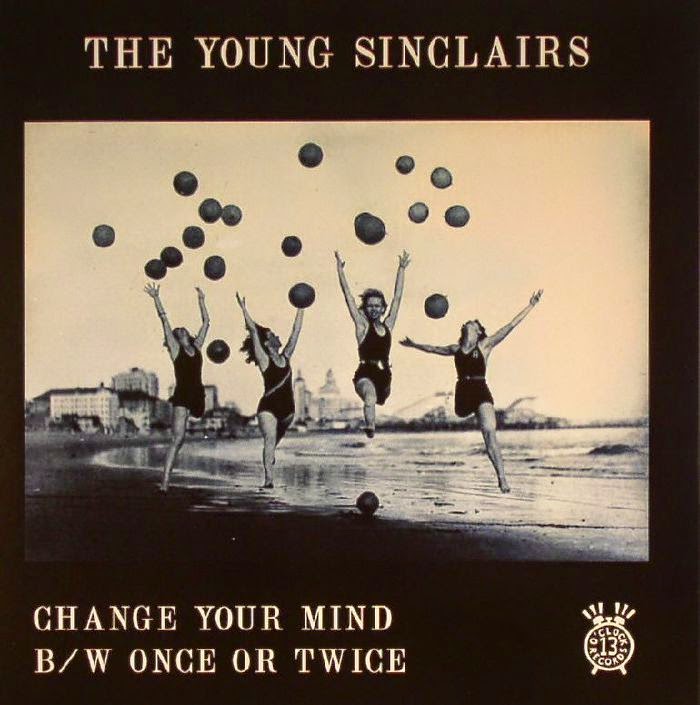
The Young Sinclairs "Change Your Mind" b/w "Once or Twice"


Reviewed by Nathan Ford

When fabulous boutique psych label 13 O'Clock Records (a favourite of ours, if you hadn't already guessed) aren't tied up releasing album of the year contenders like this, they're building up a steadily growing catalogue of killer 7"s.

The freshest of these comes from Virginia based garage folk-rockers the Young Sinclairs. You probably remember me going all evangelical about them when Ample Play released this excellent introduction to their work late last year. If you didn't end up getting that, then you should. And get this at the same time, as they're pretty much incapable of doing wrong in any form. I'll hold back on the 'injustices of the world, why aren't they household names' schtick, but you get the general idea. The a-side is a one man show with YS mainman Samuel Lunsford handling all instruments and vocals by himself. It's a lovely Chilton-esque piece of power folk-pop, with one of those achingly sad choruses that middle aged record store owners would base a sermon on in a High Fidelity world. It really is indecently good.

The b-side sees Lunsford collaborate with fellow Young Sinclair John Thompson, which doubles the 12-string jangle quotient nicely, and coupled with another devastatingly understated chorus guarantees another winner.

Lovely vintage sounding folk-rock, ideal for fans of the Kinks, or anyone looking for a less amplified take on Big Star or the Who.

You can order directly from 13 O'Clock Records here.

12 Feb 2015

Vintage Cucumber ​/​ The Holy Cosmos Split E.P


Reviewed by Joseph Murphy

It seems only fair to dedicate half this review to Vintage Cucumber and the other to The Holy Cosmos, to best outline what makes this split perfect.
Vintage Cucumber:

Prolific German musician Johannes Schulz has been releasing ambient space rock since 2012 under the moniker Vintage Cucumber. (See reviews on his previous releases on this blog.)This split, like all his music, is available digitally at optional cost, which implies, whether intentional, a love of the creative process, production, and release of music. It also allows for a bit of freedom in what Schulz can do it seems. While united under the name, skill sets, and approach, each release has a unique feel; some focus on sonic experiments, others rhythm; some onslow-release ambience, others motorik jams. For long time followers of Schulz’s work, VC’s half of this split belongs mostly to the latter – but, of course, even those lines are masterfully blurred.

Opening track “Mutterherz” clocks in at just over eight minutes (not the longest VC track). It’s fast-paced, atmospheric and indebted to Krautrock of early years, particularly Neu! andHawkwind. Light, other-worldly vocals loop around the brooding bass groove and dense layers of heavily-delayed guitars. VC’s closing track, “Windhart” slows the tempo a bit, allowing for a lush exploration of the theme: keyboards sounds like wind chimes, rushes of white noise and cymbals like a breeze.

For those new listeners, this is great introduction to Vintage Cucumber. Be sure to take time to explore his impressive back catalog as well.

The Holy Cosmos:

From what I can find, The Holy Cosmos is a relatively new band from Mexico City. From there, the six musicians’ music tells everything else. They’re a space rock band – that emphasize the rock riffs at their roots – with melodic sensibilities. Their opening track, “Fields,” follows a traditional song structure, complete with lyrics and a chorus, but everything is stretched and slowed, allowing guitars to hum and multiply in all directions, vocals to echo, and the beat to become an expected and exact pulse among the layers. “Fields” is an excellent introduction to their work, plumbing the depths of standard rock formulas for its sonic goodness. Expect more great work from The Holy Cosmos – and hopefully soon.

Together, the two sides of this release offer modern space rock at its best. The Vintage Cucumber & The Holy Cosmos Split is available here.

Available as a name your price download here:

Anthroprophh "UFO"


Reviewed by Maggie Danna

Anthroprophh’s latest album, "U.F.O", is an experimental, instrumental trip through the extraterrestrial. This Bristol based trio is comprised of Paul Allen of The Heads and Jesse Webb and Gareth Turner of The Big Naturals.  Ambient but heavy, "U.F.O" is mainly comprised of percussion, guitar, and electronic freak out. Each song is named after the date and location of a specific UFO sighting in the United Kingdom between the 1950s and 1970s. I highly recommend looking up summaries of each UFO encounter, as this can really increase appreciation of the album and help induce a sense of the supernatural.

"U.F.O" begins ominously with “14.10.54 Southend On Sea.” A light warble drones while a voice in the background repeats numbers and the word “bravo” from the NATO phonetic alphabet. Intensity slowly increases throughout with the addition of a humming, as one would expect from an aircraft, and the interjection of sudden guitar jabs. “17.7.55 Bexleyheath” continues seamlessly from “14.10.54 Southend On Sea,” amping up the tempo and greatly increasing intensity and feedback. Soon, extreme scratchiness and wailing guitar distortion reign.

“13.8.56 Lakenheath” is more whimsical than the previous songs, though no less eerie. Fluttery flutes and technological beeping dominate the soundscape. A driving, march-like drum beat picks up towards the end. Through the transition to “4.4.57 West Freugh” the tempo becomes frantic. The rising cadence creates a sense of desperation and evokes a feeling of approaching extraterrestrial invaders.

Subdued and spacious, “19.5.65 Warminster” could be the calm before the storm. Simple drone space rock, with a whistling, jingly background, the peace is soon broken by a deep humming and sudden cymbal crashes. The landing of alien vessels? Perhaps. “19.5.65 Warminster” fades out and “28.4.67 Brixham” begins with several quartets of stark guitar notes, reminiscent of those in Pink Floyd’s “Shine On You Crazy Diamond,” only more desolate and jarring. A steady, driving bass line picks up and is soon accompanied by a warbling guitar. Static and jarring screeching with a wind-like whooshing soon take over, but the song returns abruptly to a more conventional, though highly creepy, steady rock rhythm.

“26.10.67 Owermoigne” is frantic and highly rhythmic, while “23.1.74 Berwyn Mountain” is a quirky electronic mash up of telephone-like beeps. The finale, “22.9.78 Weedon BEC,” ends the album on a heavy, garage rock note with droning guitars and mild distortion.

I suggest exploring "U.F.O" in a comfortable environment where you can give it your undivided attention. Please listen to it all the way through; the transitions are perfectly seamless, and the album is way more powerful as a whole. I also wouldn’t suggest listening to this while driving in the dark on the roads of the United Kingdom; this would probably be unsettling.

That sold out really, really quick. Keep an eye on Cardinal Fuzz here, or harrass them for a repress.

10 Feb 2015

The Active Listener Sampler #29


Sampler time!
Premieres for new tracks from Dr Cosmo's Tape Lab & the Prefab Messiahs. And Rodriguez fans - make sure you check out Surf Man - The Dead Rock's surf version of Sugar Man!

1. Dr Cosmo's Tape Lab - The Painted Birds 02:19
2. Slowgold - Det Osynliga 02:16
3. Tredici Bacci - Papa Schizzare 03:51
4. Keith Seatman - Susan's Always Strange 03:28
5. LOVEBYRD - Shot From The Sun 04:29
6. The Holy See - The Love Infinity 05:44
7. The Prefab Messiahs - Ssydarthurr 02:51
8. The Late Pioneers - Lightheaded 02:16
9. Arnold Fish - The Guilty (Il Copevole) 03:30
10. Ancient Cities - Velvethead 04:14
11. The Dead Rocks - Surf Man 09:26
12. The Sigmaticle Tour Green - Time Warp Through Barrett Station 03:55
13. Wild Rocket - I'm Not Like Everybody Else 03:48
14. Topos Locos - Come On Back 03:00
15. You're Smiling Now But We'll All Turn Into Demons - The Sorcerers 04:50

Sleeve art by Marky Wildstone - www.wildstone.com.br

Stream or download here!

The Prefab Messiahs "Keep Your Stupid Dreams Alive"


Reviewed by Nathan Ford

Massachusetts garage-psych good chaps The Prefab Messiahs return after a 32 year absence from the studio to show those young bucks just how it's done. A co-release between Burger Records and KLYAM Records, "Keep Your Stupid Dreams Alive" is a mini-album which few would have expected a few years back. Following a unanimously positive response to a recent series of reissues of their early eighties material, the line up of Xerox Feinberg, Trip Thompson, Doc Michaud and Ned Egg decided that a trip into the studio was in order. And unlike the majority of these reformation types of arrangements, "Keep Your Stupid Dreams Alive" is a raw, lively affair with none of the creeping malaise and raw nerves associated with 'getting the band back together'.

Doug Tuttle & Jesse Gallagher (some of those afore-mentioned young bucks) captured this on tape, doing an admirable job of ramping up the band's already considerable levels of weirdness. Some may suggest that these two are responsible for injecting some youthful vigour into proceedings, but I have my suspicions that they're simply capturing and manipulating the Prefabs doing what they do, the only way they know how to do it.

Whatever the process, the results are extremely entertaining. It's really 32 years since these guys were last in the studio together? Hell, these guys don't even sound like they're out of their early twenties, nothing tired about this.

"Keep Your Stupid Dreams Alive" is a loosely conceptual album, charting a Siddhartha ("Ssydarthurr") like journey inspired by the band's own early days, including plentiful references to their guru Bobb Trimble ("Bobb's Psychedelic Car"), whom I'm sure the majority of you are already big fans of.

Raucous garage psych pop is the order of the day - fans of more recent practitioners like Thee Oh Sees, Black Lips, King Tuff etc. will be right at home here, but these guys did it first. No need to respect them just for their pioneering qualities though, the songs themselves are irresistibly catchy too. "Ssydarthurr" is an early highlight with it's kooky, eastern influenced fairground organ putting the hooks in early on before album highlight "Orange Room" unfurls it's mysterious, creepy delights.
"Booshwa Sally" on the other hand is the Velvet Underground on L.S.D rather than uppers, and "College Radio" and the title track are out and out anthems.

This is one lively record. Due out in early March, you'll be able to check out a premiere of one of the album's tracks on our next sampler very, very soon. In the meantime, follow the Prefab Messiahs here for updates and pre-order opportunities.

The Thons "Hot Fun"


Reviewed by Todd Leiter-Weintraub (Hop On Pop)

In 2014, a little band called The Thons released their second full-length album, Thirty Foot Snake. It was a raw slab of rock and roll that simultaneously recalled both the punk rock coming out of New York in the late 1970s, and also the early 80s response from UK bands such as The Fall and Gang of Four. It was ferocious and intimate at the same time, decidedly punk rock—but the playing indicated that there was something more going on, too.

On Hot Fun, the Chicago trio is digging a little deeper and showing the world what was bubbling underneath the surface. And it’s a little bit psychedelic.

The album opens with “Wooo,” a track so soaked in reverb that you can practically hear the springs bouncing. A surf/Dick Dale influence that there was no trace of on the band’s previous records takes front and center. It’s an opener that makes a very clear, very loud statement: the band’s sonic palate has been expanded.

“Lose Control” follows with an arrangement that frames Graham Onak’s half-spoken Mark E. Smith-like vocalizing with some great, angular guitar parts. Onak, a lefty, is an outstanding player with a southpaw’s skewed sensibilities. Here his instrument punctuates his vocal ejaculations with squeals of pain. Or is it pleasure? Maybe both. The surf sound of the first song has been twisted around on itself to resemble something like Television playing with Sonic Youth, under the spell of Syd Barrett.

“Being Me” introduces the record’s first real vocal melody, and it’s a good one. Here Onak belts out (ironically?) that “It still feels good to be me” with a ton of attitude. But, despite the apparent irony, it actually sounds like it does feel good to be him. It’s pure rock n’ roll joy that comes and goes in less than 2:00 as drummer Greg Bry channels Tommy Ramone, pounding out the beat with blistering speed while still somehow managing to groove.

And from there, the album keeps whizzing by: “Looking Out, Looking In” straddles the line between psych and punk more than any other song on the record, with Bry doing his best Keith Moon. “Feeling Alive” finds bass player Frank Thom’s fingers crawling all over the neck of his instrument, pumping out eighth notes and slipping them in to the spaces between the guitar and drums. Off-kilter and grooving all at once.

Comes the time to wrap the whole thing up, The Thons give us their most intimate offering. “He Lives” is reminiscent of Sonic Youth’s more-tender moments on Daydream Nation. It’s a lovely way to end the album, as gentle guitar figures, McCartney-esque bass playing, and a surprisingly touching lyric pull the listener in close to say goodnight.

The entire album flies by in less than 23 minutes: all punk rock energy, colored with a psychedelic flair. And while there are some excellent guitar solos, there is no hint of the blues in them; these songs leave no room for extended psychedelic jams. This record is lean and mean, with incredible playing turned in by all parties. And it’s all crisply recorded, with a haze of reverb blanketing the songs like a Peter Max paint job on a 2-seat muscle car.

Or, to use a different analogy: on their previous albums, the band served up a plate of meat-and-potatoes punk rock. This time, it’s meat and potatoes with gravy—mushroom gravy.

Anxiously looking forward to the next course.

Available through the Bandcamp link below. More info, lyrics etc. here.

8 Feb 2015

ENPSE / Tredici Bacci "Concetti" / "Vai! Vai! Va!"


Reviewed by Nathan Ford

Tredici Bacci are back! You'll hopefully remember that a year or two back I shared the debut from this excellent, vintage Italian style pop orchestra with you (if not, check this out right away).

The new album (or double E.P depending how you want to look at it) is certainly not a case of 'let's do the debut again'. It's split into two distinctly separate halves, credited to two different acts who share the same group members, given different ensemble names to signal the differences in approach on each side. Confused? I was too to start with, so let me explain further.

First up is "Concetti" by the Ensemble for the Exploration of New Perspectives in Sound Exploration (ENPSE), made up of ten of Tredici Bacci's New England Conservatory of Music graduates, all of whom had studied non-idiomatic improvisation. ENPSE is an affectionate homage to the approach of Gruppo di Improvvisazione di Nuova Consonanza - an avant garde, free improvisation group, spearheaded by Ennio Morricone, Egisto Macchi and other likeminded forward thinkers. Like Il Gruppo's music, ENPSE's is explorative, unpredictable, and thrillingly unconventional. It's not 'easy' music by any stretch of the imagination, but fans of vintage Italian cinema will recognize and embrace the claustrophobic, head over heels nature of much of this side's music. It's the sort of stuff ideally suited for arcane, black mass rituals or hazy, drug-infused fever dreams, psychedelic by its very nature, without needing to resort to any sort of studio trickery to enhance its kaleidoscopic disorientation.

The other side, "Vai! Vai! Va!" is credited to Tredici Bacci, and is a welcome continuation of the sexy, cinematic lounge grooves of "The Thirteen Kisses", effortlessly melodic, with ornate arrangements that capture every period nuance to perfection. "It's set up to seem like the surviving music from a long lost Italian sex comedy spy film from 1974" explains Tredici Bacci's Simon Hanes, and it does that with aplomb, all muted trumpets and wordless Edda Dell'Orso vocals. It's indescribably lovely, and any efforts on my behalf to do so would almost certainly come up short. Best thing is to head over and have a listen.

For those who thought "The Thirteen Kisses" (now available on vinyl!) showcased an impressively versatile ensemble, you ain't heard nothing yet.

Limited edition cassette can be pre-ordered through these streaming links:


The Holy See - Music from the TV Series "Osiris"


Reviewed by Grey Malkin (The Hare & The Moon)

Another lost gem from the vaults of audiological archaeologists Villa 9, the soundtrack to 1969's supernatural detective series OSIRIS gets its first glimpse of sunlight in over forty years. OSIRIS (Operation Sinister; Investigation, Research and Intelligence in the Supernatural) lasted just one series and was by all accounts a mind bendingly lysergic action show, pitting our groovy protagonists against vampires, ghosts and various interdimensional and extraterrestrial beings, all backed by truly far out and funkadelic house band The Holy See (from which Simon Magus would emerge to later create some of the 70's most unsettling and creative soundtracks for the likes of 'Goatman' and 'Mary'). Think Patrick Macnee’s The Avengers in space tussling with Frankenstein whilst gorged on microdots and you still wouldn't be close. The OSIRIS team, composed of Kensington Gore (playboy, adventurer and master of dark magick), Olivia Sharp (computer expert and telepath), Chester Droog (astral projector, pan-dimensional traveller and drummer in his band The Cosmic Droogs), Maya Midnight (CIA operative, expert in martial arts and TNT, and thanks to her grandmother, a high priestess of Voodoo) kept Britain safe from supernatural threat for only a short time but, thanks to Villa 9's extensive archives, we can relive the sounds if not the sights of this cult but iconic programme.
 
The soundtrack to the show is similarly and appropriately psychedelic but it is also subtle, sophisticated and expertly woven together. Opener 'Theme from OSIRIS' is a case in point; John Barry-esque harpsichord provides a nostalgic and thrilling centrepoint atop a growing symphonic backdrop of atmospheric electronica. The sound of tabla begins 'Agent Midnight' before a groovy flute enters and flits in and out of a deeply funky bassline; there is at heart here a kind of hip, sinister edge to proceedings as befits the nature of the show, a kind of spectral swinging London vibe. 'Olivia's Dream's sci-fi drones and shimmering glassy notes echo the BBC Radiophonic Workshop's tape experiments of the era, haunting and ethereal yet also tangibly threatening. 'The OSIRIS Incident' reprises the motif from the show’s theme as fairground organ and strolling bassline enter, Will Campbell's choppy wah wah guitar creating a expertly controlled groove over the hum of futuristic whirring whilst keyboard notes pick out an ominous and mysterious refrain. The track slows, becoming yet more filled with analogue dread and then is whisked away with on a tractor beam sound effect into nothingness. Reminiscent of Dudley Simpson's classic 'The Tomorrow People' soundtrack, this track (and the album as a whole) is equally ground-breaking and immersive; the layers of instrumentation creating a delicate and pervasive mood and atmosphere that is cleverly and subtly built upon for maximum effect on the listener. 'Demi-God', an interlude of backwards sitar, serves as a segue into the equally Eastern tinged 'The Love Infinity', a choral moog wig out amongst Isaac Hayes basslines and wild Hammond organ solos. This has to be heard to be believed; it is ambitious, unafraid, unrepentant and massively enjoyable. Next, ‘Down the Rabbit Hole’s backwards tapes and reverberating glockenspiel are utterly unsettling and otherworldly; a hugely effective musical piece of disorientation and altered perception. 'Dimension Chase' with its hints of both Hawkwind and Amon Duul, is krautrock motorik deluxe, a syncopated tambourine beat keeping time for the fuzzed up organ and howling guitar notes that swirl beneath. An album highlight (and there are numerous) this is a dark as midnight piece of 60’s beatnik cool that Harry Palmer himself would be proud to have playing as his theme music.

'Psychic Children' changes the pace, resonating and chiming electronic sounds merging with flute in an acid tinged symphony of sci-fi horror.  Suggestive of soundtracks to other such sinister children's TV classics as 'Sky' or 'The Changes', or indeed the more adult 'Quatermass Conclusion', this is a masterfully arranged and emotionally charged piece. 'Magick Mirror's cosmic harp tentatively suggests at something hidden,  just out of the line of sight before 'Party At The Electric Freakout' is just that; a full blown psyche freak out. On a bed of Jay Darlington's virtuoso Hammond and vintage synths, Will Campbell's guitar screams across the speakers, pulsating bass lifting g the entire song off the ground heavenwards. Modern purveyors of psych wig outs Goat would give their left arm to groove like this. 'The Mind Machine' utilises Delia Derbyshire-style sound effects which peal and chime discordantly, evoking the nostalgic sound of TV space travel for all those of a certain age. 'The Venice Assignment' returns us to the haunted harpsichord, from which an angelic choir of keyboards creates a cathedral of sound that grows and builds until...ominous silence. 'The Electron Cloud' in turn utilises treated percussion and sound effects which then lead into Bootsy Collins style flanged bass, reminding us that there may be monsters in this show but the Osiris team are there to deal with them in the most funky way possible. Mellotron strings weave around the beat to create something at once hypnotic and trance like whilst also disquietingly on edge and unusual. 'End Title Theme (Voyage Eternal)' starts with echoed glockenspiel before Chester Droog's drums lead into piano and sepia tinted minor keys which take us into the midnight thrill and danger of the Carnaby Street London of films and TV shows such as 'Performance', the brightly coloured swagger of ‘Ace Of Wands' and again, the sinister and unusual ‘The Tomorrow People’.

This is an exceptional soundtrack to what by all accounts was an inventive and original show (perhaps too much so for some audiences, given its short run). This music has been lovingly crafted and woven together to paint a particular mood and aura that is both bohemian, swinging, psychedelic and, at times, sinisterly hip. A musical tapestry of sorts, it links its full on acid funk tracks by way of unique and atmospheric electronic interludes; the overall result is an impressive suite of futuristic and thrilling found sounds, electronica  and psych freak outs. Take a trip....to where OSIRIS are still protecting the nation from interdimensional threat in the coolest way imaginable.

Available here: