Californian folk troubadour Elyse Weinberg has been someting of an underappreciated musical gem until recently. Elyse only released one record under her real name, her self-titled debut album, which hit # 31 on the Billboard charts, prompting an appearance on the Tonight show. Cher even recorded one of Elyse’s songs (“Band of Thieves”) for the 1969 film "Chastity", but the song was mistakenly credited to Sonny. This led to only minor success in the years that followed before Elyse decided to change her name to Cori Bishop.
Fast forward 30 years and the discovery of her music by Andrew Rieger of Elf Power. He brought her music to the attention of important people, and along with that attention came critical acclaim, with bands such as Vetiver and Dinosaur Jr. covering her song “Houses”. And now we have a first ever release of her unreleased 1971 album "Greasepaint Smile". The album was produced by Neil Young’s engineer David Briggs and features a very young Nils Lofgren on guitar. Hearing Elyse’s accomplished singing and playing, very much in the vein of Jefferson Airplane and Fairport Convention with a bit of honky tonk and dancehall vibe, it’s hard to imagine this not being a hit back in the day, had it been released.
There are wonderful songs like the aforementioned “Houses”, where Neil Young plays guitar and where Elyse channels the late Sandy Denny. Or how about “City of the Angels”, which is prime late 60s folk rock with a backing band that almost sounds like CSN? “What You Call It” is more in the confessional, Joni Mitchell vein so prevalent back then, but Elyse rises above it with good lyrics and a hint of blues behind her folk. “It’s Alright to Linger” might well be a lost classic from The Band and has that honky tonk piano I enjoy so much. “Collection Bureau” is a nice slice of bluesy folk with tasteful guitar licks, while “Gospel Ship” trips down the country blues lane frequented by the Stones (“Sweet Virginia”). “Nicodemus” is another fine bluesy number with harmonica and piano tightly winding around Elyse’s husky vocals. The remaining songs, including the title track “Greasepaint Smile” dwell in the same musical vein and underscore what a fine talent this singer/songwriter is. It's great to see this become available finally.
Recommended for all fans of late 60s folk and blues.
When Julian House and Jim Jupp founded Ghost Box in 2003/2004 with a desire to integrate "music for schools, cosmic horror stories, library music, English surrealism, and the dark side of psychedelia", few would have imagined that so many would feel the inescapable pull of the duo’s creation.
Aiming to create "not just a record label, but an imaginary world", House and Jupp quickly discovered that they weren’t alone in their desire to nostalgically recreate the future that they were told in the seventies awaited them. By fusing elements of the fantastical with the everyday, they created something uniquely English with an aesthetic entirely its own which would have a profound effect upon a number of other musicians who suddenly discovered that they weren’t alone, as well as a generation of listeners who grew up watching public service announcements and foam rubber aliens in front of cardboard sets.
And now eleven years later we have the label’s first retrospective collection, and while it’s surprising that it’s taken this long for something of this nature to bubble to the surface, the lengthy time period covered does allow for a much better perspective on how the ‘hauntology’ genre has evolved. Anyone who accuses the label of being a one-trick pony will have their arguments swiftly negated by a listen to the many, varied contents on display here.
The label's three dominant names – The Advisory Circle (Jon Brooks), Belbury Poly (Jupp) and the Focus Group (House) - are all well represented here. Brooks is certainly the most ‘traditional’ of the three, with many of his tracks sounding as if they’ve been lifted directly from 1970’s science documentaries, although even he is unpigeonholeable, as the fabulous Neu-isms of “Mind How You Go Now” will attest to. And his compositional skills are without equal, with hooks unlike any you’ll be expecting to find in electronic music. Belbury Poly mines similar territory, but spreads his influences further afield, with more contemporary electronic music covertly influencing some of his tunes, as well as a tendency to experiment with acoustic instrumentation and the human voice, as heard on the “The Geography”. And the Focus Group is something else - indescribable really. House has taken the idea of fusing English surrealism and psychedelia further than anyone else that I’ve ever encountered.
And there’s much more here beyond these three, with recent signings the Soundcarriers, John Foxx and Hintermass (whose upcoming album is previewed here) extending the label’s range into areas where vocals play a more dominant role. That this has been done without compromising the label’s singular vision demonstrates the care that goes into everything that the label releases.
This is a great collection, but let’s be clear. In no way should this be considered a substitute for the rest of the label’s back catalogue. There are at least five or six essential albums on the roster that you should own as well (start with "The Belbury Tales" and "As The Crow Flies"). But as a starting point for the uninitiated, this essential release will be a real eye opener. And for those who don’t
feel the need to own all of the label’s releases, this makes a splendid gathering up exercise, with key tracks expertly plucked and sequenced in a fashion that will make you think again about a number of releases that you’d decided you didn’t need.
Love's final studio album Reel to Real is finally being reissued. You can read about it here on Dangerous Minds, where you can also hear a previously unreleased bonus track "Graveyard Hop".
Welsh psychedelic alchemists Soft Hearted Scientists have announced a deluxe reissue of their album "Tales From the Everyday Undergrowth" with an extra disc of demo recordings.
Underground psych-folk legend Nick Garrie is back in action, and Le Guess Who? are premiering a new song on their website. He'll also be playing at the next Le Guess Who? Festival.
The two-disc version of the new Bob Dylan Bootleg Series entry is now streaming over at NPR - sounds amazing!
Kosmischer Läufer Volume Three is now available for digital pre-order. Vinyl pre-orders will become available once the Kosmo's have received the records, and are satisfied with the pressing quality.
Windy Bangs’ debut album, "Mind Stuff", is a nostalgic lo-fi romp. Psychedelic but not always wildly so, the Brooklyn-based band’s LP often as more of a dream pop edge, and could best be described as a conglomeration of shoe gaze and doo-wop, mixed with garage / surf rock.
"Mind Stuff" opens with “Languid Love”, a short love proclamation over oohs and ahs with gentle guitar strumming in the background: “She rose like a tide from her saltwater sea, with lips smooth as the moon’s cheeks. It was then that I knew that this was love and she was my one, the brightest pearl in my deep cocktail glass.” Then “Love at the Four Moons” takes over. This is a woozy continuation of the infatuation-laden opener and increases the energy; the acoustic strumming turns to electric guitar, still using the same chords, and the talking turns to gentle singing.
“Wide Eyed” continues in a similar vein with vocal flourishes and harmonies. The melody and background vocals are reminiscent of 1950s pop and have a touch of the Beach Boys as well, but the lyrics are thoroughly modern. Singing, “this is the mark of our disculturation process,” the band channels the desire to have an authentic life with a unique interpretation of the world with one’s own mind and eyes, instead of through media consumption.
The album progresses and begins to incorporate more garage elements into its previously low-key sound. “Red Pants” picks up both the tempo and the intensity of the guitar. “Pulmonary Health” takes the garage sound further and truly embodies dark surf rock with droning guitar, a bit of dissonance, and classic surf riffs. The songs begins to mellow out again towards the end and the final track, “Hymn for Bean”, is dreamy and acoustic, toning it back completely and ending the album on a relaxing note in the most satisfying way.
I’d recommend this album most if you like surf rock in the vein of Heaters and the Growlers, as well as doo-wop. Standout tracks are “Love at the Four Moons”, “Wide Eyed”, and “Pulmonary Health”.
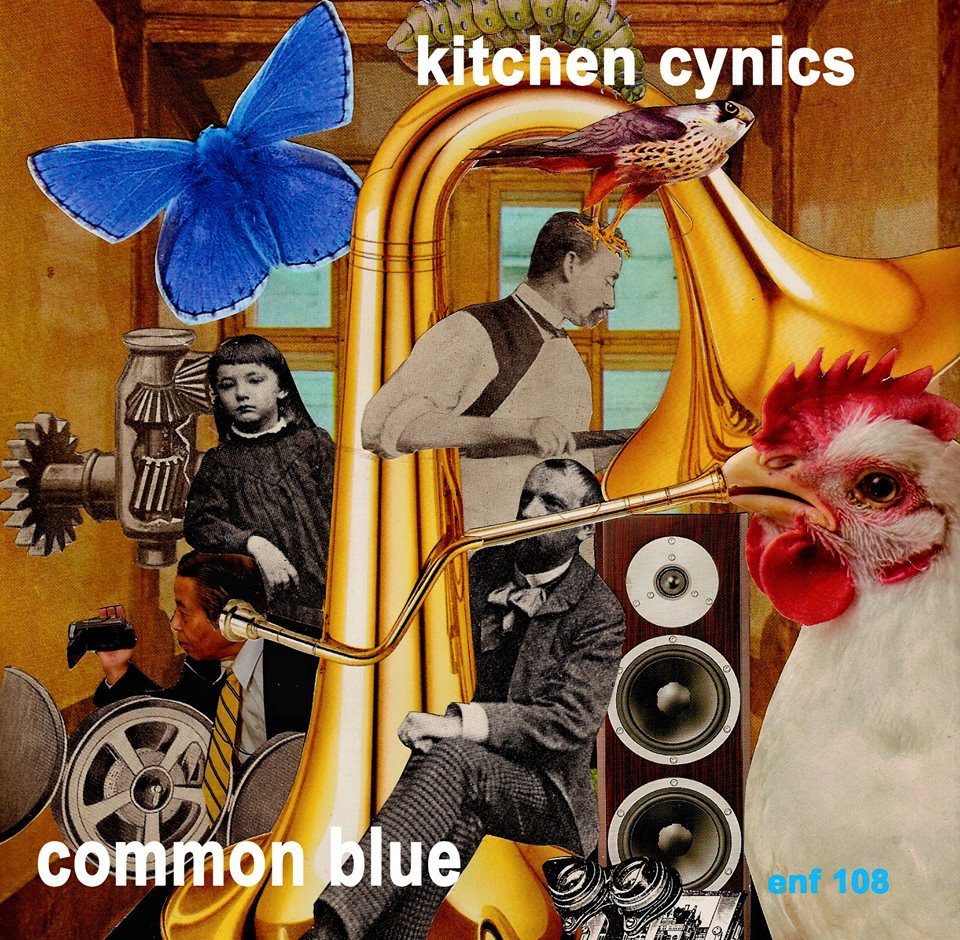
We're priviliged today to be digitally releasing the latest album from prolific Scottish psych-folk artist the Kitchen Cynics. We often wax lyrical about the artists we love here on the Active Listener, and occasionally when we're really lucky, we get to release quality material like this, from one of those very same artists.
"Common Blue" is a brand new 2015 studio album from Alan Davidson, and it's not alone: in the next few weeks we'll also be releasing "Rainthinking", another new studio release, this time from Davidson's more experimental group, Matricarians.
CD-Rs of both titles are available directly from Alan (kitchencynics@googlemail.com)
Reviews by Nathan Ford
Mystic Brew - Space is the Place to Be
While many psychedelic artists bristle at the idea that they're part of a revival, Russian band Mystic Brew proudly apply the 'sixties revival' tag to all of their
Bandcamp releases. The most recent of these, "Space is the Place to Be", is exactly the sort of influence-on-sleeve homage that we love so much here at Active Listener Towers. There's a well observed, affectionate Doors tribute in "World Won’t be the Same", but the band are at their best when they rely less on their influences and pursue their own muse. The title track demonstrates this best, all vintage garage vibes, Manzarekian keys (again) and explorative guitar jams straining at the leash.
Available as a free download here (as are some of their earlier releases):
Walter Ghoul's Lavender Brigade .... Is Coming
While we're in tribute / homage territory let's check out Walter Ghoul's Lavender Brigade. Originally released in 1999, this excellent effort from Damien Youth and the less prolific, but equally fab Zane Armstrong has recently found its way onto Bandcamp as a free download. It’s an unabashed love letter to UK sixties psych-pop, essentially borrowing the Dukes of Stratosphear's bag of neo-psychedelic tricks, and ramping up the lysergic fairground elements. It's a colourful wonderland which suggests Syd Barrett has been enlisted in Sgt. Pepper's Lonely Hearts Club Band, bringing a top tier selection of tunes along for the ride.
The original twelve track album can be had on a name your own price / free basis through the streaming link below, while those who want to dig deeper can buy a complete 26 track collection of the Brigade from Damien Youth's Bandcamp page.
The Age - Trafalgar
Halifax, Nova Scotia seems to be one of the planet's psychedelic hotspots for the time being. And thanks to the wonders of the interweb we get to hear the filtered through effects of whatever it is that's in the water there. Justin McGrath obviously drinks a lot of that water. We've covered his band Shadow Folk numerous times within these pages, and here he is aboard another equally psychedelic, and potentially even more splendid flagship, the Age. Title track "Trafalgar" is a hazy mirage of a song, with gently undulating harmony vocals, and layers of dreamy backwards guitars. Lovely. But don't relax too much because "Innocent Man" is a much more raucous affair, sounding like a vintage rehearsal recording from some previously unknown Lennon / Kinks collaboration.
Download the EP through the streaming link below, and have a dig around the rest of their Bandcamp page for more free downloads.
Hermione Harvestman - Lammas
We've talked about hermetic rambler Hermione Harvestman before, and I’m sure we'll continue to do so while her archival Bandcamp page is excavating naturalistic yet unearthly gems like this. For those unfamiliar, Hermione Harvestman was a church organist who composed spectacular solo electronic pieces in her spare time, amassing an impressive catalogue of Radiophonic kosmische gems, which have only begun to find their way into the world since her death in 2012.
"Lammas" is the latest of these, a single, lengthy meditation upon the festival, filtered through the usual gorgeous vintage synth tones, which conjure images of ley lines and stone circles. Harvestman's unhurried, understated approach is unmatched in my opinion, and this is as good a place as any to fall under her spell. Lovers of vintage kosmische sounds will absolutely adore this.
Using infinite space and the loneliness of the vacuum as an extended metaphor for the human condition is a familiar concept, but rarely has its depths been plumbed so thoroughly as they have been by Bristol based singer/guitarist James McKeown (of Hi-Fiction Science and excellent solo work), recording this time under the name The Dead Astronaut. His self-titled debut as such is a concept record, but one that balances narrative with tone and allows for elasticity in the record without breaking from the idea. As is probably obvious from the cover art, McKeown is after the dramatic big picture - but, to his credit, every song remains grounded in human experience over contextual drama.
Using voice samplings can be difficult, but opening track “North Star Loop” sets the tone fairly well with, from what I can gather, an exchange between HQ and an astronaut pre-flight, using odd phrases like "pre sleep" and “post sleep” without being heavy handed or overly obtuse. Accompanying music is a dramatic build that feels cinematically bleak - a fitting introduction to the album and follow up “Concrete Town,” which hits all the right notes of lush acoustic rock.
McKeown’s songwriting is natural, and, as far as the quality of his arrangement, he’s offered a consistent but experimental set here, never really sticking with every piece of a formula as he propels forward through space. “Ricochet,” for example, as McKeown laments the (really only decades) old astronaut’s dilemma of separation, utilizes drum samples, live drums, strings, and acoustic guitar, and makes fine use of a wah-wah pedal. Besides, we get these very ambiguous lines that are somehow mesmerizing too (sorry for any mis-typing or -representation): “There’s a hole in my hope that I hoped you could fill/Now there’s a hole in your head that means that you never will…” and “We stare at our tiny screens, at the old photographs.”
The eponymous track provides the most interesting use – at least to this listener – of the motif, drawing a search and rescue mission as a metaphor for social place and meaning. And McKeown pulls it all off well, in a well-arranged, mellow near sing-along in the style of the best folk-rock ballads.
To McKeown’s credit, “The Dead Astronaut” feels immediate, as though each song, though likely meticulously arranged and produced, was recorded in a sitting. For those of us who associate space exploration with long jams and weird synths, glazed-over riffs, “The Dead Astronaut” turns purposefully to a more intimate and personal experience – with the exception of “Skyboat Reprise,” which is all those things – and prefers the resonating acoustic guitar chords to delay-laden jammers.
Prolific Dutch space-rockers Radar Men From The Moon (they prefer RMFTM these days) maintain a busy album a year schedule - a difficult task for an instrumental band to set themselves without being in danger of flooding the market with a bunch of samey material. Fortunately RMFTM seem to be in a constant state of flux, and rather than repeating themselves, their albums act as a chronicle of their evolution from b-movie sampling riff monsters to the much more cerebral and textural outfit that you'll meet on their latest release "Subversive 1".
The idea behind the title is a simple one. There's no shortage of artists out there with a desire to grab attention by subverting the norm, but very few are willing to turn that ideal upon themselves. RMFTM are one of those few, continually turning what they think they know on its head in their desire to evolve. And the "1" in the title? This is the first in a trio of "Subversive" albums - this one featuring the core band line up alone, but with the intention of bringing in outside musicians for future volumes, to introduce new perspectives.
Over four lengthy tracks the band continue to expand upon their expansive, gritty space rock sound, setting up hypnotic rhythms with mathematical precision while layers of carefully controlled chaos erupt from the guitars. There's none of the spacey kosmische keyboards you'll find on many genre releases, RMFTM instead preferring to remain much more grounded, with the guitars and keys often taking on a textural, semi-industrial character.
It's an easy album to be drawn into, with its relentless hypnotic sway seeming to attach itself to the rhythms of the listener's own body, with new layers of melodic content introduced at just the right moments to ensure maximum impact. And there's a sense of resolution to each of these pieces which makes them strangely satisfying, best exemplified by "Neon", which shapeshifts from menacing metallic clang, to a joyous outpouring of wondrous energy.
Instrumental psychedelia which engages the mind, while working on a deeper, primal level as well. Excellent.
I gotta tell you dear listener that I am an old man. I have lived, and I remember the early 80's well, living through it as a teenager. It truly was a different world back then and in little ol' England and I have to say for most of the decade it was grim. One of the few pleasures to be derived from the early 80's was the weekend pilgrimage to the video store. And the browsing of shelves to find the latest uncensored splatter fest to watch at home with your mates, when someone's parents were out. Or even more risqué material if you were brave or had a proper older brother to hassle. Maybe augment the viewing experience by smoking a few ciggies and raiding a parental drinks cabinet or two for good measure. That was my scene, friends.
Now I am guessing that Videogram (aka Magnus Sellergren) is also a time traveller from that distant dimension. My reason for this belief is their latest outing on all things VHS, the remarkable Cineploit record label. It is called 'Pre Cert' which itself is a direct reference to the 'video nasty' storm of the earlier 1980's and over its (unlucky) 13 tracks it resolutely sticks to its mission to transport the listener back to approximately 1982 by taking inspiration from the video soundtracks to those movies upon which so many schoolyard discussions were based. The selection of musical excursions are often dark, usually doom-laden, and stuffed to the gills with trademark 80's synth and drum/guitar work that somehow straddles a selection of genres that may broadly be termed rock. This really is a love letter to a bygone age. A love letter that is written in blood by someone in an asylum who has just murdered a dozen high school kids in a series of gratuitous, ingenious and perverted tableaux. Its Jan (Bloody) Hammer set loose in the chop shop with Jason for company. Way to go!!!
And so to the selections themselves, particular highlights for me include the drum 'n' synth stomper "Killer on Interstate 40" with its sickly synth washes and nods to the work of such luminaries as the legendary H.Tical (aka Blue Phantom) whose sole 1973 outing 'Distortions' remains the benchmark by which all other auteurs in this musical territory should be measured. "Camp Blood" which I presume is a tribute to the Friday the 13th film series, pulses along with nasty squalls of keyboard and occasional curdling screams. Nice. "Dawn of the Apocalypse" has me simultaneously digging a nuclear shelter in the garden and sharpening broom handles to stab zombies in the head with whilst being beholden to its slow whistles and chimes, all driven by that relentless 80's snare beat. I also just got a flashback to Crockett and Tubbs kicking back in the Florida Keys with a marguerite and a blonde lingerie model on Miami Vice. WHAT IS GOING ON HERE?
No matter my hallucinations, we are compelled by the quality of the music to proceed. A brief interlude into the world of 70's/80's 'sexy films' is visited upon us in the form of the soft focus sweeps of "Le Erotici Notti de Emanuelle" (RIP Sylvie Kristal) which actually is far sexier than most of the Emanuelle films ever were (so I have heard - we never rented them. Not ever.). I particularly love the way the downright filthy saxophone break strides into the room after a minute or so and the mental camera pans to the flickering fire and a quick glimpse of something naughty. Excellent.
The final track proper on this truly beautifully executed homage is the magnum opus called "Man is the Warmest Place to Hide", a near 13 minute psychic voyage through the mind of Videogram which allows him to stretch out and play the long game. It is apparently a tribute to everyone's favourite 80's special effects body horror movie, "John Carpenters: The Thing". Yeah that's right, the one with Kurt Russell looking like late era Jim Morrison, the one with the guy getting his arms bitten off, the one with the other guy's head turning into a giant spider. Yeah that's right, the one with the dog that has something dreadful happen to it which then kills all the other dogs. Yeah that's right, the one where everyone but Kurt and one of his pals is pulverised into human hamburger by some fiendish alien presence. The one where Kurt utters the immortal line, "I don't know what it is; but its weird and pissed off." YEAH THAT ONE.
And I have to say it is a great piece of music, morphing as it does over its five sections in varying dark moods, one part is a bit like a mash up of 'Another Green World' and the 'Knight Rider' theme tune. You know that's got to be good right? And it is. As well as a bit disturbing. The fade into air raid sirens and an approximation of leg-irons clashing together is a throwing the 'kitsch-en' sink moment par excellence. The 'Pre Cert' aural journey then ends as it began with the credits in the form of a 'Videogram Indent'. You can relax, it's only a movie, in fact it's only a soundtrack to a movie. A movie that is only in your sick and twisted mind.
So there you have it. A late night journey into the dark side with Videogram. He would love you to stay and have you for dinner. If you don't mind being on the menu of course. All fans of the genre should investigate, it's a huge amount of fun. Just don't let your mother hear it.
Available on vinyl/CD/download from the label and local stockists. First 250 of the vinyl with a CD. Check out the video for "Voorhees Stomp" here:
When David Bowie put together a list of his top twenty five albums for Vanity Fair in the early 2000s, there were a few obscurities amongst the more familiar items, one of which, "Ten Songs by Tucker Zimmerman", has just seen rerelease by RPM International. Elaborating on his relationship with the album, Bowie said "I always found this album of stern, angry compositions enthralling", and that "Ten Songs" had a "particularly telling effect on how I would collect and listen to music in the years to come".
Zimmerman was an American based in the UK at the time of "Ten Songs..." recording in 1969, and it's no surprise that Bowie was aware of Zimmerman, with Tony Visconti producing "Ten Songs" as well as playing bass, along with an impressive band that also included Aynsley Dunbar, Shawn Phillips, and Rick Wakeman. For those hoping that the Bowie connection might produce a similar work, there may be an initial pang of disappointment, but for those interested in the crossover point between expansive folk-rock and the burgeoning singer-songwriter movement, this is a fascinating and surprisingly diverse listen.
Often compared to Donovan, the songs on here are much grittier, more politically charged, and angry than anything I can ever imagine flowing forth from the Don's pen, and often quite rollicking. Opener "Bird Lives" makes the most of its Bo Diddley beat (and slyly references the Trashmen), while "Running, Running from Moment to Moment" sounds an awful lot like what might have happened had Buddy Holly lived to see the baroque pop era.
Elsewhere, "Children of Fear" channels Zimmerman's dissatisfaction with the state of his country into a terse, brittle rocker, with some impressively fiery bursts of sitar from Shawn Phillips adding emphasis.
It's on the more pensive, folky tracks though that Zimmerman sounds most comfortable. "October Mornings" and "The Roadrunner" are slow burning gems with a moody quality which hint at early Tim Buckley, with sympathetic, and understated arrangements from Visconti which suit the material perfectly.
There's plenty of bonus material on this new extended edition from RPM as well, including a number of foreign language recordings (of different songs) originating within the same timeframe, and best of all, pre-album singles "The Red Wind" and "Moon Dog" which are delivered with even more certainty than the album material. These two lost classics are almost certainly the most convincing items waiting to be discovered here, and elevate this new version of "Ten Songs.." from 'very good' to 'lost classic' status.